
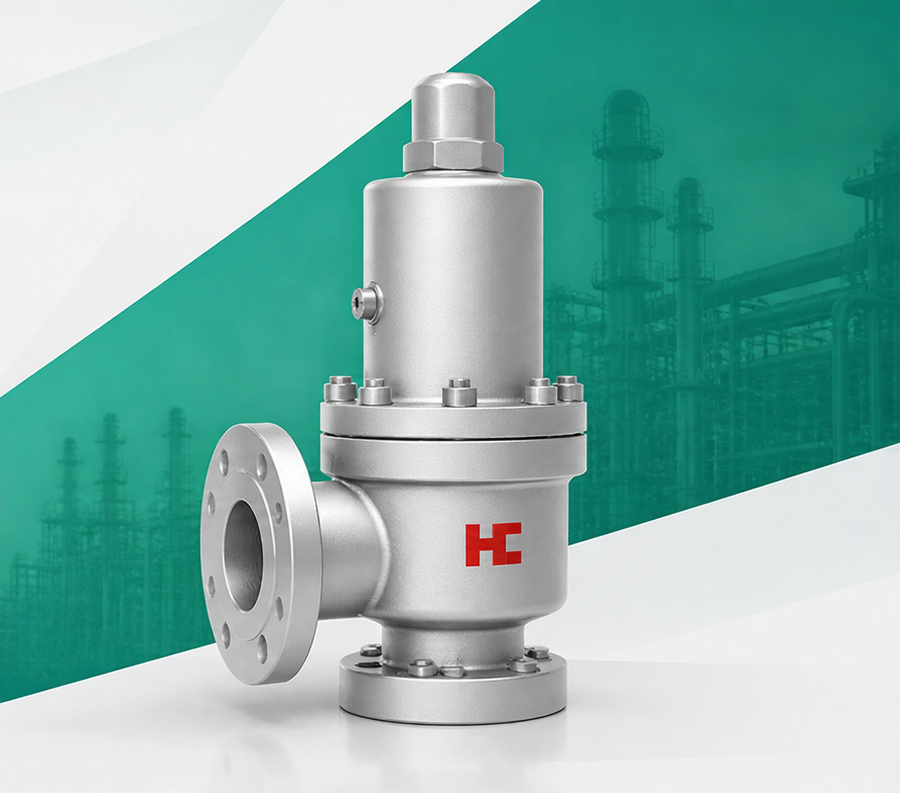
HTGS steam safety valves
Engineered Pressure Protection for Industrial Systems
HTGS SERIES
High-Performance Steam Safety Valves for Industrial Pressure Protection
The HTGS Series is designed for steam service, providing pressure-relief protection for steam systems and associated pressure-containing equipment. Selection must be based on the required relieving duty, operating conditions, valve configuration and the applicable equipment requirements.
NordenFlow supplies HTGS Series steam safety valves through its OEM manufacturing arrangement. We support the technical evaluation of valve requirements against the manufacturer’s documented product data and the specific application.
Steam Service
A dedicated product family for steam applications where pressure protection must account for the process duty, steam conditions and required relieving capacity.
Pressure-Relief Duty
Valve selection begins with the protected equipment, design limits, relieving scenario, set pressure and required capacity—not nominal connection size alone.
Application-Based Selection
Final suitability depends on verified manufacturer data, steam operating conditions, connection requirements, discharge arrangements and applicable project specifications.
Engineering note: The HTGS Series should be evaluated against the actual steam-relief scenario. Final model selection and sizing require the relevant process data and verified manufacturer documentation.
APPLICATION & RELIEF SCENARIOS
When Are HTGS Steam Safety Valves Required?
Steam systems can experience overpressure when heat input, steam generation, pressure regulation or downstream flow conditions no longer match the protected equipment’s operating limits. The requirement for a safety valve must be established through the applicable pressure-protection assessment and the credible relieving scenarios.
01. Excessive Steam Generation
Boiler or steam-generator conditions may produce more steam than the downstream system can accept. The relief arrangement must be assessed against the credible maximum steam-generation duty and the protected equipment’s allowable pressure limits.
02. Restricted Steam Outlet
A blocked or restricted outlet can prevent generated steam from leaving a boiler, vessel or other protected equipment. The relief duty must account for the credible restriction scenario and the applicable system design requirements.
03. Pressure-Regulating Failure
Failure of a pressure-reducing or regulating arrangement may expose downstream equipment to a pressure higher than its design limit. The protection assessment should establish the credible failure case, upstream conditions and required relief capacity.
04. External Heat Input
Abnormal heat input or a process upset may increase steam generation and pressure. The required relief capacity must be determined from the applicable design scenario rather than inferred from normal operating conditions.
05. Steam-System Isolation
Closing isolation or control valves can create a pressure-protection concern where steam generation or heat input continues. The protected volume, isolation arrangement and potential pressure accumulation must be reviewed.
06. Discharge-System Constraints
Discharge piping, a common relief header or other outlet restrictions can introduce backpressure. Its effects on valve capacity, opening behaviour and stability must be evaluated against the selected valve’s documented limits.
Engineering assessment: Identifying a potential overpressure scenario does not, by itself, establish the required valve size or prove that a specific model is suitable. The relief duty, set pressure, required capacity, inlet and discharge conditions, and applicable design requirements must be verified before selecting an HTGS Series valve.
VALVE DESIGN & OPERATING PRINCIPLE
HTGS Technology & Construction
The HTGS Series is a high-performance steam safety valve designed for pressure-relief service under demanding steam operating conditions. Its construction combines a spring-loaded mechanism with dedicated internal components intended to support controlled opening, discharge and reseating.
Engineering evaluation should consider the valve’s internal design, pressure conditions, steam temperature, required relieving capacity and discharge-system configuration. The suitability of each configuration must be confirmed against the manufacturer’s technical documentation.
01. Spring-Loaded Operating Mechanism
The spring-loaded mechanism maintains the closing force under normal operating conditions. When the relevant pressure force reaches the valve’s set-pressure condition, the valve opens to discharge fluid and relieve pressure. Closing and reseating behaviour depend on the valve design and operating conditions.
02. Nozzle and Disc Assembly
The nozzle and disc form the primary pressure-containing flow-control interface inside the valve. Their geometry and seating condition influence opening behaviour, discharge performance and tightness after the relieving event. Detailed inspection and maintenance requirements must follow the manufacturer’s instructions.
03. Pressure Adjustment and Blowdown
Set pressure and blowdown characteristics are important to the valve’s operating behaviour. The HTGS catalogue illustrates dedicated adjustment features; the available adjustment range and the permitted setting procedure must be confirmed for the specific model.
04. Backpressure Considerations
Discharge-system backpressure can influence valve operation and available relieving capacity. The HTGS catalogue describes a backpressure-adjusting feature. Its function, adjustment limits and suitability for a particular installation must be verified against the manufacturer’s documentation.
05. Pressure-Boundary Materials
Body, nozzle, disc, spring and other internal components must be suitable for the specified pressure, temperature and service conditions. Material selection should be checked against the manufacturer’s material tables and the project specification rather than assumed from the product family name.
06. Configuration and Sizing
The HTGS catalogue provides construction illustrations, model information, orifice-area data and sizing information. Final selection requires the applicable relieving calculation, inlet and outlet connection details, operating conditions and confirmation of the exact valve configuration.
Engineering note: Construction features alone do not establish suitability for a specific steam-relief duty. Verify the model code, set-pressure range, temperature limits, relieving capacity, materials, backpressure limitations and applicable conformity documentation before specifying the HTGS Series.
ENGINEERING SELECTION
Engineering Selection Criteria for HTGS Steam Safety Valves
Selecting an HTGS Series steam safety valve requires more than matching nominal pipe size or normal operating pressure. The valve must be evaluated against the protected equipment’s design limits, the credible overpressure scenario, required relieving capacity and the installation’s operating conditions.
01. Set Pressure and Design Limits
Establish the required set pressure and verify the allowable pressure limits of the protected equipment.
Required data: Equipment design pressure, normal operating pressure, required set pressure and applicable accumulation limits.
02. Required Relieving Capacity
Determine the required steam discharge rate for the governing credible overpressure scenario before selecting the valve orifice and model.
Required data: Required mass flow, relieving pressure, steam condition and the basis of the relief calculation.
03. Steam Operating Conditions
Confirm the fluid state and operating conditions that influence valve selection, material suitability and capacity calculations.
Required data: Steam type, operating and relieving temperature, pressure and any relevant fluid-condition details.
04. Inlet and Outlet Connections
Verify the valve connection arrangement and piping conditions. Inlet pressure loss and outlet backpressure must be assessed for the intended installation.
Required data: Inlet and outlet sizes, flange rating and facing, connection standard, inlet piping details and discharge arrangement.
05. Materials and Temperature Rating
Confirm that pressure-boundary and internal component materials are suitable for the specified steam service and design conditions.
Required data: Body and trim material requirements, design temperature, corrosion considerations and project material specifications.
06. Codes and Documentation
Confirm the governing design code, project requirements and documentation required for the specific application. Product conformity must be verified for the offered model.
Required data: Applicable code, project specification, conformity requirements, inspection and testing documentation.
Recommended Engineering Workflow
STEP 01
Define the relief duty
Identify the protected equipment and governing overpressure scenario.
STEP 02
Establish capacity
Determine the required relieving rate and calculation conditions.
STEP 03
Verify the HTGS model
Check documented capacity, pressure limits, connections and materials.
STEP 04
Review installation compliance
Confirm piping conditions, discharge arrangements and project documentation.
Selection principle: Nominal valve size alone does not establish adequate relieving capacity. Final HTGS selection must be supported by the applicable sizing calculation and verified manufacturer data for the exact configuration and service conditions.
INDUSTRIAL APPLICATIONS
HTGS Steam Safety Valves — Industrial Applications & Typical Use Cases
Steam safety valve selection depends on the pressure-generating equipment, the steam distribution arrangement and the credible overpressure conditions. The HTGS Series can be evaluated for industrial steam applications where its documented design, capacity and operating limits meet the requirements of the protected equipment.
01. Industrial Boilers
Boiler pressure protection requires assessment of steam-generation capacity, allowable working pressure and credible operating or equipment-failure scenarios.
Engineering focus: Required relieving capacity, set pressure, steam conditions and applicable boiler requirements.
02. Steam Distribution Headers
Main steam headers and distribution systems may require pressure-relief protection based on their design limits, supply conditions and the consequences of restricted downstream flow.
Engineering focus: Header design pressure, upstream supply conditions, isolation arrangements and discharge routing.
03. Process Steam Systems
Industrial process steam networks supply heat to production equipment and process users. Pressure protection must account for the operating envelope and credible pressure-transfer or control-failure scenarios.
Engineering focus: Process operating conditions, protected equipment limits and pressure-regulation failure cases.
04. Steam Heat Exchangers
Steam-heated equipment may require protection against credible overpressure conditions arising from its supply arrangement, control configuration or process design.
Engineering focus: Equipment design pressure, steam-side conditions, isolation scenarios and applicable protection requirements.
05. Energy and Utility Plants
Industrial energy facilities use steam for heating, process services and power-related operations. Valve selection must reflect the actual steam duty and the requirements of the protected system.
Engineering focus: Steam-generation duty, design conditions, discharge-system constraints and project specifications.
06. Industrial Steam Equipment
Steam-containing vessels and auxiliary equipment may require dedicated pressure-relief protection where identified by the equipment design and overpressure assessment.
Engineering focus: Protected volume, credible pressure sources, required relieving rate and applicable design code.
Application Suitability Review
An application category alone does not establish that a particular HTGS model is suitable. Before specifying the valve, verify the required capacity, set pressure, relieving temperature, materials, inlet and outlet connections, backpressure limitations and applicable equipment requirements.
For project enquiries: Provide the equipment data sheet, process conditions, required relieving rate and applicable project specification so the proposed configuration can be evaluated against the manufacturer’s documented data.
TECHNICAL ENQUIRY & PRODUCT EVALUATION
Engineering Review & Technical Enquiry — HTGS Steam Safety Valves
A reliable steam safety valve selection begins with a clear definition of the protected equipment, relieving scenario and required discharge capacity. NordenFlow supports the technical evaluation of HTGS Series requirements against the available manufacturer data and the specific project specification.
01. Process and Operating Data
- Steam service and operating conditions
- Normal operating pressure and temperature
- Required set pressure
- Relieving pressure and temperature
- Required relieving capacity and calculation basis
02. Equipment and Relief Duty
- Protected equipment type
- Equipment design pressure and temperature
- Governing overpressure scenario
- Required relief rate or existing sizing calculation
- Applicable equipment design code
03. Valve and Piping Specification
- Required inlet and outlet connections
- Nominal sizes, flange rating and facing
- Body and internal material requirements
- Inlet pressure loss and discharge backpressure
- Installation, inspection and documentation requirements
04. Existing Valve or Replacement
- Existing manufacturer and model
- Nameplate and identification details
- Set pressure and rated capacity, if available
- Connection dimensions and photographs
- Reason for replacement or modification
From Technical Enquiry to Valve Selection
STEP 01
Submit Requirements
Provide the process data, equipment specification and required relief duty.
STEP 02
Review the Application
Identify missing information and establish the technical selection basis.
STEP 03
Verify Product Suitability
Check the proposed HTGS configuration against documented manufacturer data.
STEP 04
Clarify the RFQ
Confirm the technical scope, required documentation and commercial enquiry details.
Request an HTGS Steam Safety Valve Evaluation
Share your steam conditions, required relieving capacity and equipment data with NordenFlow to initiate a technical review of the HTGS Series for your application.
Submit a Technical EnquiryFinal product selection is subject to verified manufacturer data, applicable sizing calculations and project requirements.