
PRESSURE PROTECTION
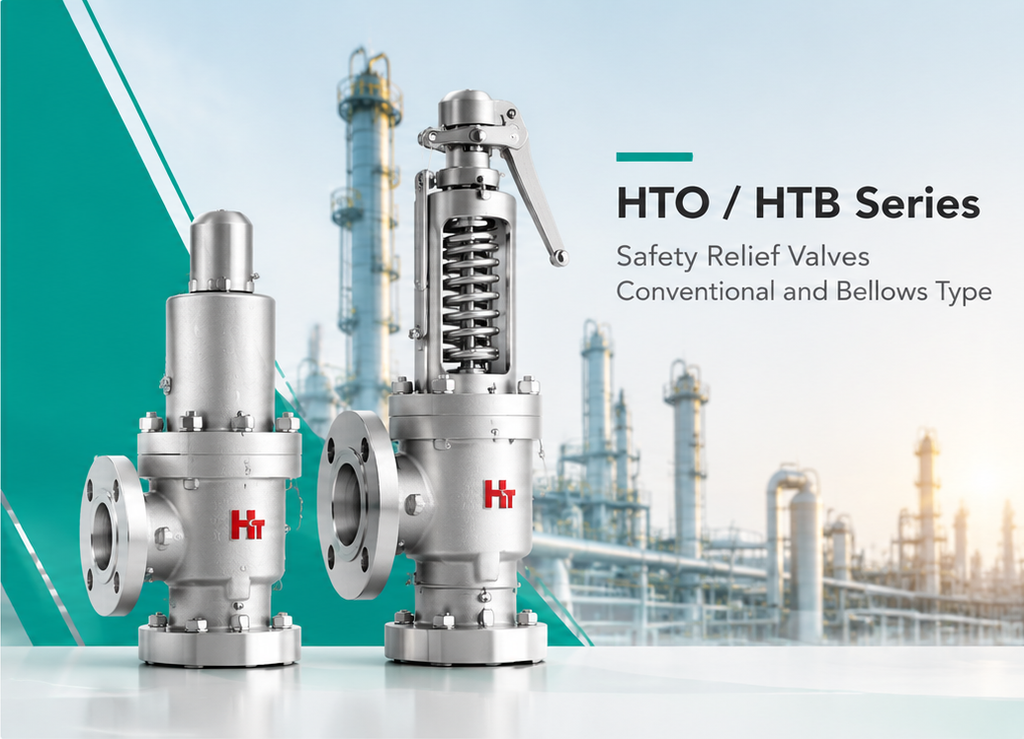
HTO conventional safety relief valve and HTB balanced-bellows safety relief valve
HTO & HTB SERIES
Conventional and Balanced-Bellows Safety Relief Valves
Safety relief valves protect pressure-containing equipment against unacceptable overpressure by discharging fluid when the pressure reaches the specified set point. Correct selection depends on the protected equipment, relieving scenario, required capacity, fluid conditions and installation constraints.
NordenFlow supplies HTO conventional and HTB balanced-bellows safety relief valve configurations through its OEM manufacturing arrangement. The appropriate construction must be evaluated against the process requirements and the manufacturer’s documented operating limits.
HTO — Conventional Safety Relief Valves
Conventional spring-loaded construction for applications where the effects of discharge backpressure can be accommodated within the valve’s documented operating limits.
Selection focus: Set pressure, required capacity, superimposed and built-up backpressure, and installation conditions.
HTB — Balanced-Bellows Safety Relief Valves
Bellows-equipped construction intended to reduce the influence of applicable discharge backpressure on valve operation. Suitability depends on the specific design, pressure conditions and manufacturer limitations.
Selection focus: Backpressure conditions, bellows design limits, required capacity, material compatibility and installation requirements.
Engineering-Based Valve Selection
Both construction types require evaluation against the actual relieving duty. Nominal connection size alone is not sufficient to establish valve capacity or application suitability.
Selection focus: Relief calculations, set pressure, fluid properties, temperature, connections, materials and applicable project requirements.
Engineering note: A balanced-bellows design does not eliminate all backpressure limitations. Final selection of an HTO or HTB valve must be based on the verified manufacturer data, the required relieving capacity, installation conditions and applicable design requirements.
APPLICATION & RELIEF SCENARIOS
When Are Safety Relief Valves Required?
Pressure-containing equipment may require dedicated overpressure protection when a credible process upset, equipment failure or external condition can cause pressure to exceed its allowable limits. The required relief arrangement must be established through the applicable design basis and overpressure assessment.
01. Blocked or Restricted Outlet
A blocked discharge path or closed downstream valve may cause pressure to rise when an upstream source continues supplying fluid.
Engineering focus: Maximum credible inflow, protected equipment design pressure and required relieving capacity.
02. Pressure-Regulator or Control Failure
Failure of a pressure-reducing or control device may expose downstream equipment to a higher upstream pressure than it is designed to withstand.
Engineering focus: Upstream pressure, credible failure mode, downstream design limits and relief-flow calculation.
03. Thermal Expansion of Trapped Liquid
Liquid trapped between isolation points can develop excessive pressure when heated. A suitable thermal-relief arrangement may be required for the identified scenario.
Engineering focus: Trapped volume, credible heat input, liquid properties and required thermal-relief rate.
04. External Fire or Heat Exposure
External fire exposure can increase pressure in vessels containing liquids or vapour and may increase vapour generation. Where credible, the scenario must be assessed using the applicable relief-design method.
Engineering focus: Exposed surface area, fluid properties, heat input assumptions and required emergency-relief capacity.
05. Discharge Header Backpressure
A shared discharge header or restricted outlet can create superimposed or built-up backpressure. These conditions may affect conventional valve operation and must be evaluated when selecting either construction type.
Engineering focus: Superimposed and built-up backpressure, discharge-system design and manufacturer operating limits.
06. Multiple Pressure Sources
Equipment connected to several pressure sources may be exposed to different credible overpressure scenarios, including failure of an upstream isolation or pressure-control arrangement.
Engineering focus: Source pressures, flow paths, isolation philosophy, governing scenario and required capacity.
Conventional or Balanced-Bellows Construction?
The choice between HTO conventional and HTB balanced-bellows construction should consider the expected discharge backpressure and its effect on valve performance. A bellows design may reduce the influence of applicable backpressure, but it does not remove all pressure, capacity or installation constraints.
Engineering note: Identifying an overpressure scenario does not automatically establish the required valve type or size. Final selection requires the applicable relief calculation, verified manufacturer data and confirmation of the installation conditions.
TECHNOLOGY & CONSTRUCTION
HTO vs HTB — Conventional and Balanced-Bellows Safety Relief Valves
Conventional and balanced-bellows safety relief valves differ primarily in how discharge backpressure can influence their operating behaviour. The HTO Series represents conventional construction, while the HTB Series incorporates a bellows arrangement intended to reduce the influence of applicable backpressure on valve operation.
HTO SERIES
Conventional Safety Relief Valve
In conventional spring-loaded construction, discharge backpressure can influence the forces acting on the valve disc and therefore affect opening and reseating behaviour.
Engineering considerations
- Superimposed backpressure
- Built-up backpressure during discharge
- Set-pressure and capacity effects
- Discharge piping configuration
- Documented operating limits
HTB SERIES
Balanced-Bellows Safety Relief Valve
Balanced-bellows construction uses a bellows element to reduce the effect of applicable discharge backpressure on the valve’s operating forces. The degree of compensation and permitted operating conditions depend on the specific design.
Engineering considerations
- Superimposed backpressure conditions
- Bellows pressure and temperature limits
- Bellows material compatibility
- Bellows integrity and maintenance
- Residual backpressure and capacity limits
Engineering Technology Comparison
| Evaluation criterion | HTO — Conventional | HTB — Balanced-Bellows |
|---|---|---|
| Construction | Conventional spring-loaded design | Spring-loaded design incorporating a bellows |
| Backpressure influence | Can affect operating forces and performance | Designed to reduce applicable backpressure effects |
| Discharge system | Backpressure must remain within verified limits | Backpressure must also remain within verified limits |
| Additional inspection focus | Seat condition, spring mechanism and operating performance | Standard valve checks plus bellows integrity |
| Selection basis | Relief duty, capacity and backpressure assessment | Relief duty, capacity, backpressure and bellows design limits |
How to Select Between HTO and HTB
Start by establishing the required relieving capacity, set pressure and expected discharge backpressure. Evaluate whether the HTO conventional design can meet the specified operating limits. Where backpressure effects require a different construction, assess the HTB balanced-bellows design against its documented pressure, temperature, capacity and material limitations.
Important: A bellows does not eliminate all backpressure constraints or replace correct relief-valve sizing. The final selection must be verified against the exact manufacturer’s model data and installation requirements.
Engineering Selection Criteria for Safety Relief Valves
Selecting a safety relief valve requires more than matching the nominal pipe size or the normal operating pressure. The valve must be evaluated against the protected equipment limits, the credible overpressure scenario, the required relieving duty and the pressure conditions at the discharge connection. These inputs also determine whether a conventional HTO design or a balanced-bellows HTB design warrants further evaluation.
Set Pressure and Protected Equipment
Establish the required set pressure using the applicable design basis and the allowable pressure limits of the protected equipment.
- Protected vessel, pipeline or process equipment
- Design pressure and applicable pressure limits
- Required set pressure and pressure units
- Applicable code, project specification and governing requirements
Required Capacity and Overpressure Scenario
Valve sizing must be based on the governing relief case rather than normal operating conditions alone.
- Credible cause of overpressure
- Required relieving rate or engineering sizing calculation
- Fluid composition and relevant physical properties
- Relieving pressure and temperature
Backpressure Evaluation
Establish the pressure conditions at the valve outlet before deciding whether a conventional or balanced-bellows arrangement is suitable.
- Superimposed backpressure at the discharge connection
- Built-up backpressure during relief
- Discharge header pressure variation
- Outlet piping and discharge-system configuration
Process Compatibility
Materials and internal configuration must be compatible with the process medium and the specified operating and relieving conditions.
- Fluid phase and corrosive or erosive characteristics
- Normal and relieving temperatures
- Body, trim, sealing and connection material requirements
- For HTB evaluation, bellows compatibility and service limitations
Connections and Installation
Confirm the mechanical interfaces and installation constraints before finalizing the valve specification.
- Inlet and outlet connection type and size
- Required pressure class or rating
- Available installation space and orientation
- Inlet pressure loss and discharge piping considerations
Compliance and Verification
The final selection must be checked against the applicable project requirements and supported by the required technical documentation.
- Applicable design code and jurisdictional requirements
- Certified capacity and sizing documentation, where required
- Material and inspection documentation
- Manufacturer data sheet, drawings and maintenance requirements
HTO or HTB? Evaluate the Backpressure Conditions
The choice between the HTO conventional design and the HTB balanced-bellows design should follow the actual discharge-system conditions and the manufacturer’s verified design limits. A balanced-bellows arrangement may reduce the influence of applicable backpressure on valve operation, but it does not remove the need to assess allowable backpressure, bellows suitability, discharge piping and the complete relief case.
| Engineering question | Why it matters | Required input or verification |
|---|---|---|
| What is the governing overpressure case? | Defines the required relieving duty. | Relief scenario and sizing basis. |
| Is backpressure present or variable? | Can influence valve performance and the suitability of the selected design. | Superimposed and built-up backpressure calculations or estimates. |
| Is the process medium compatible with the proposed materials? | Material and sealing compatibility affect service suitability. | Fluid composition, temperature and materials requirements. |
| Is a bellows arrangement appropriate? | Bellows compatibility and design limits must be checked for the specific duty. | Manufacturer’s technical confirmation and applicable product documentation. |
| Are the mechanical interfaces defined? | Ensures the selected valve can be integrated into the installation. | Connection details, pressure rating, layout and piping information. |
Engineering Review Before Specification
A reliable valve specification starts with a defined relief case, not a preliminary model choice. Provide the protected equipment data, set pressure, required relieving capacity, process medium, temperature and discharge backpressure conditions. NordenFlow can use this information to review the application and coordinate the appropriate HTO or HTB configuration with the supplier.
Industrial Applications & Typical Use Cases
Safety relief valves protect pressurized equipment when process conditions exceed defined pressure limits. Their selection depends on the credible overpressure scenario, required relieving capacity, process medium, operating temperature and discharge-system conditions. NordenFlow offers engineering support for evaluating conventional HTO and balanced-bellows HTB configurations against the requirements of the application.
Pressure Vessels and Process Equipment
Pressure vessels and process equipment may require overpressure protection where blocked outlets, control failures or other credible process deviations can cause pressure to rise beyond the permitted limit.
- Process vessels and pressurized equipment
- Process skids and packaged equipment
- Equipment exposed to multiple pressure sources
- Installations requiring a defined relief discharge route
Oil, Gas and Petrochemical Facilities
Process units in oil, gas and petrochemical facilities can experience overpressure due to equipment isolation, pressure-control failure, thermal effects or abnormal operating conditions.
- Process and utility equipment
- Pressurized vessels and associated systems
- Equipment connected to common discharge headers
- Applications where backpressure must be assessed
Thermal and Utility Systems
Pressurized liquid and gas systems within industrial utility installations require assessment of credible pressure-rise scenarios, including thermal expansion where liquid can become trapped between isolation points.
- Pressurized utility circuits
- Thermal fluid and liquid service, where suitable
- Isolated sections exposed to temperature changes
- Equipment with defined maximum allowable pressure
Chemical and Specialty Process Plants
Chemical service requires careful evaluation of fluid properties, temperature, corrosion mechanisms, sealing materials and the consequences of relief discharge.
- Pressurized process equipment
- Service involving corrosive or chemically active media
- Systems with specific material compatibility requirements
- Applications requiring a reviewed discharge arrangement
Industrial Manufacturing and Plant Utilities
Manufacturing facilities use pressurized systems for process operations and plant utilities. Relief protection must be evaluated against the equipment design basis and the consequences of a pressure excursion.
- Pressurized process and service equipment
- Industrial utility systems
- Equipment with pressure-reducing or control devices
- Systems requiring defined inspection and maintenance access
Installations with Backpressure Constraints
Where relief valves discharge into a common header or a pressurized collection system, outlet pressure conditions become an important part of valve selection.
- Common discharge headers
- Discharge systems with variable pressure
- Installations where built-up backpressure must be calculated
- Applications requiring evaluation of a balanced-bellows design
Typical Engineering Scenarios
Scenario A — Conventional Relief Arrangement
A protected item of equipment requires overpressure protection, and the discharge-system conditions are compatible with the verified operating limits of a conventional valve.
Engineering review: Confirm the relief case, required capacity, set pressure, outlet conditions and the manufacturer’s allowable limits before specifying an HTO valve.
Scenario B — Backpressure Requires Further Evaluation
A valve discharges into a header where superimposed or built-up backpressure may influence valve operation.
Engineering review: Quantify the backpressure conditions and evaluate whether an HTB balanced-bellows configuration is suitable for the service.
Scenario C — Trapped Liquid Exposed to Heating
Liquid trapped between closed isolation points can expand as its temperature rises, potentially creating excessive pressure in the isolated section.
Engineering review: Determine whether dedicated thermal relief protection is required and verify that the selected valve is suitable for the liquid service and required relieving duty.
Application Suitability Must Be Verified
These examples describe common engineering situations, not automatic product recommendations. The HTO or HTB model, valve size, materials, pressure rating and configuration must be confirmed against the actual process data, sizing calculations and applicable manufacturer documentation.
For applications involving hazardous fluids, elevated temperatures, corrosive media or complex discharge headers, the review should also consider the consequences of discharge, inlet and outlet piping effects, inspection access and the relevant project requirements.
Engineering Review & Technical Enquiry
Selecting a safety relief valve requires a defined relief duty and an understanding of the protected equipment, process medium and discharge conditions. NordenFlow supports the technical evaluation of HT HTO conventional and HTB balanced-bellows safety relief valve options, coordinating product suitability and configuration requirements with the supplier.
New Valve Applications
For a new installation, provide the process design basis and required relief conditions so the valve configuration and sizing can be evaluated against the application.
- Protected equipment and process service
- Set pressure and design pressure
- Required relieving capacity or sizing calculation
- Operating and relieving temperatures
- Inlet and outlet connection requirements
Conventional vs Balanced-Bellows
Where discharge backpressure may affect valve performance, the pressure conditions should be established before selecting between HTO and HTB designs.
- Superimposed backpressure
- Estimated or calculated built-up backpressure
- Common discharge header conditions
- Process medium and bellows compatibility, where applicable
- Manufacturer-confirmed design limitations
Existing Valve Assessment
For replacement or technical review, existing equipment data can help establish the current configuration and identify information that requires verification.
- Existing valve nameplate and model information
- Manufacturer data sheet and drawings
- Set pressure and rated capacity, where documented
- Known operating or maintenance issues
- Changes to process conditions or discharge piping
Information to Include in Your Enquiry
The following information helps establish the technical basis for the enquiry. If some details are not yet available, submit the available documents and identify the outstanding data for review.
Process Data
- Fluid name, composition and phase
- Normal operating pressure and temperature
- Required set pressure
- Required relieving pressure and temperature
- Governing overpressure scenario
- Required capacity or available sizing calculation
Mechanical Data
- Inlet and outlet sizes and connection types
- Required pressure class or rating
- Body and trim material requirements, if specified
- Installation constraints and orientation
- Applicable project specifications and design code
Discharge-System Data
- Discharge to atmosphere or closed system
- Superimposed backpressure, if known
- Built-up backpressure, if calculated
- Discharge header operating conditions
- Relevant inlet and outlet piping information
How the Engineering Review Proceeds
Review the Application
Examine the process data, protected equipment limits and stated overpressure scenario.
Establish the Relief Duty
Identify the required capacity and review the relevant inlet, outlet and backpressure conditions.
Evaluate Valve Configuration
Review HTO or HTB suitability against the application and the supplier’s verified product limits.
Confirm Technical Details
Coordinate outstanding sizing, materials, connections, documentation and commercial requirements.
Technical Boundary
Preliminary product evaluation does not replace a verified valve-sizing calculation or the engineering responsibility for the complete pressure-relief system. Final selection must be confirmed against the applicable design basis, governing requirements and manufacturer documentation.
Discuss Your Safety Relief Valve Requirement
Send NordenFlow your process data sheet, existing valve documentation or project specification. We can review the available information and coordinate the technical evaluation of a suitable HTO conventional or HTB balanced-bellows configuration with the supplier.
Submit a Technical Enquiry