
RELEBAL Solutions
Smart Valve Positioners and Partial Stroke Testing (PST)
Smart Valve Positioners and Partial Stroke Testing
Automated valves rarely become engineering concerns during normal operation. They become engineering concerns when valve movement can no longer be verified with sufficient confidence, when operating behaviour begins to drift from expected performance, or when maintenance decisions rely on assumptions rather than observable valve response. In these situations, engineers require greater visibility into valve behaviour without expanding shutdown scope or increasing unnecessary intervention.
Smart valve positioners and Partial Stroke Testing technologies address different aspects of that engineering challenge. One improves the understanding of valve movement and operational behaviour throughout the valve lifecycle, while the other provides a controlled method for confirming movement capability without demanding a complete process interruption. Selecting between these technologies—or determining where they complement one another—depends on engineering objectives rather than equipment preference.
At NordenFlow, engineering discussions begin with system behaviour before product selection. Our role is to evaluate how diagnostic capability, operational verification, and maintenance strategy influence valve performance across the entire instrumentation lifecycle, helping project teams improve system understanding before considering equipment replacement.
When Smart Valve Positioners and Partial Stroke Testing Become Necessary
Intelligent valve diagnostics are typically introduced when conventional position indication no longer provides sufficient engineering confidence for maintenance planning, operational assessment, or valve performance verification. At this stage, engineering attention shifts from confirming a control signal to evaluating whether actual valve movement can be demonstrated under operating conditions.
Reduced Visibility into Valve Behaviour
Conventional limit switches confirm end positions but provide little information about valve travel quality, response consistency, or developing mechanical degradation between operating cycles.
Maintenance Decisions Require Better Evidence
Repeated field observations, inconsistent operating behaviour, or unexplained maintenance findings often indicate that additional diagnostic information is required before maintenance actions can be prioritised with confidence.
Full Valve Movement Is Operationally Undesirable
Production constraints or limited shutdown opportunities may prevent routine full-stroke verification, creating demand for engineering methods that can confirm valve movement without interrupting normal process operation.
Transition to Condition-Based Maintenance
As maintenance strategies evolve from time-based interventions toward condition-based planning, engineers require objective valve performance data to support inspection intervals, maintenance priorities, and long-term asset management.
Technology Landscape
Although Smart Valve Positioners and Partial Stroke Testing modules are frequently installed on the same automated valve package, they serve different engineering purposes. One technology continuously evaluates valve behaviour during operation, while the other periodically verifies that sufficient valve movement can be achieved without demanding a complete process shutdown. Understanding these complementary roles establishes the foundation for effective engineering evaluation.
Smart Valve Positioners
Intelligent positioners manage commanded valve movement while continuously monitoring travel behaviour, actuator response, and operating conditions. Their primary engineering role is to provide diagnostic visibility that supports valve performance assessment throughout the equipment lifecycle.
Partial Stroke Testing Modules
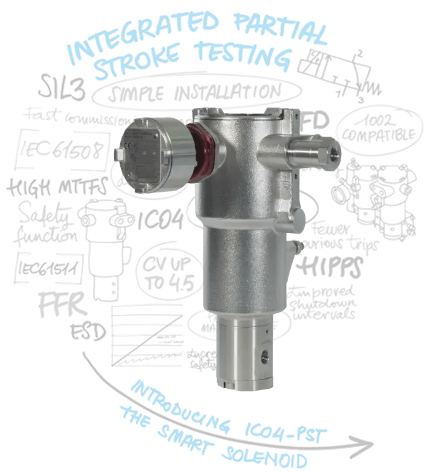
Partial Stroke Testing modules perform controlled valve movement over a limited travel range to verify mechanical availability while maintaining normal process operation. Their engineering role is centred on movement verification rather than continuous diagnostic monitoring.
Complementary Engineering Roles
These technologies are not alternatives in many valve automation strategies. Smart positioners generate operational insight during normal service, whereas Partial Stroke Testing provides scheduled verification of valve movement capability. Together, they improve engineering visibility across both continuous operation and periodic functional assessment.
Engineering Evaluation
Selecting Smart Valve Positioners, Partial Stroke Testing, or a combination of both begins with understanding the engineering objective rather than comparing device specifications. The evaluation focuses on the type of information required from the valve throughout its operating lifecycle and the operational constraints under which that information must be obtained.
Continuous Diagnostic Visibility or Periodic Verification?
Determine whether engineering decisions depend on continuous monitoring of valve behaviour throughout normal operation or on scheduled confirmation that the valve can perform its required movement when called upon.
Required Depth of Valve Condition Information
Evaluate whether engineering decisions require simple position confirmation or deeper insight into valve travel characteristics, actuator response, friction trends, and changes in mechanical behaviour over time.
Process Operating Constraints
Consider whether full valve movement is acceptable during operation or whether process continuity limits the extent of functional verification that can be performed without affecting production.
Integration with Maintenance Objectives
Assess how diagnostic information or movement verification will support inspection planning, maintenance prioritisation, and long-term valve performance assessment across the asset lifecycle.
Typical Engineering Scenarios
Smart Valve Positioners and Partial Stroke Testing are rarely introduced as isolated instrumentation upgrades. They are more commonly evaluated during broader engineering activities where valve performance, operational verification, or lifecycle objectives become part of the project scope.
Brownfield Automation Upgrades
Existing valve assemblies remain mechanically suitable, but instrumentation upgrades are introduced to improve operational insight and support evolving maintenance or operational objectives without replacing the complete valve package.
Front-End Engineering Design (FEED)
During early project development, engineers determine the level of valve intelligence and operational verification required before instrumentation philosophies and equipment specifications are finalised.
Turnaround and Asset Life Extension
Planned outages provide opportunities to review whether existing valve instrumentation continues to satisfy operational expectations or whether additional diagnostic and verification capabilities should be incorporated before returning the plant to service.
Instrumentation Standardisation Programmes
Multi-unit facilities often review valve instrumentation strategies to establish consistent engineering practices, simplify lifecycle support, and align future projects with common diagnostic and verification approaches.
Engineering Technology Comparison
Smart Valve Positioners and Partial Stroke Testing technologies are not competing solutions. They address different engineering objectives within the valve lifecycle. Comparing their operational behaviour helps engineers determine where each technology contributes to the overall instrumentation strategy.
| Engineering Factor | Smart Valve Positioners | Partial Stroke Testing |
|---|---|---|
| Primary Engineering Objective | Continuous assessment of valve behaviour during normal operation. | Periodic confirmation that valve movement remains mechanically achievable. |
| Operational Focus | Ongoing valve performance observation. | Controlled movement verification at scheduled intervals. |
| Engineering Output | Diagnostic information supporting lifecycle assessment. | Evidence that valve movement capability remains available. |
| Typical Engineering Value | Supports informed maintenance and performance trending. | Supports verification where full operational movement is impractical. |
| Relationship Between Technologies | In many engineering projects, Smart Valve Positioners and Partial Stroke Testing are complementary technologies. One provides continuous operational insight, while the other provides scheduled verification of valve movement capability. | |
Smart Valve Positioners for Control Stability, Feedback Accuracy, and Process Diagnostics
In modulating process control applications, valve positioning accuracy directly influences loop stability, process efficiency, product quality, and energy consumption. Smart valve positioners continuously compare control signals with actual valve travel, automatically adjusting actuator response to maintain precise positioning under changing process conditions. By combining closed-loop control with advanced diagnostics, digital valve positioners help improve control performance while providing visibility into valve and actuator health.
Continuous Valve Position Correction and Travel Accuracy
Smart valve positioners continuously compare the incoming control signal with actual valve position, automatically correcting actuator movement to maintain accurate valve travel during varying operating conditions.
Improved Control Loop Stability and Response Consistency
Dead band, hysteresis, friction effects, and actuator non-linearity can create unstable process control. Accurate position feedback helps reduce oscillation, improve loop response, and maintain consistent process performance.
Advanced Valve and Actuator Diagnostics
Diagnostic functions monitor friction levels, air leakage, travel deviation, actuator condition, positioning accuracy, and abnormal valve behavior before performance deterioration affects process control.
Integration with DCS, PLC, and Digital Automation Platforms
Support for HART, FOUNDATION Fieldbus, Profibus, and other industrial communication protocols enables integration with distributed control systems, asset management platforms, and centralized diagnostic environments.
Reliable Position Feedback Under Dynamic Process Conditions
High-resolution position feedback improves confidence in applications where process stability depends on repeatable valve movement, accurate modulation, and predictable actuator performance.
Predictive Maintenance and Asset Reliability Support
Historical diagnostic data, valve signatures, and actuator performance trends help maintenance teams identify developing faults early and plan service activities before unexpected process disruptions occur.
Smart Valve Positioners for Critical Process Industries
Nordenflow supports IMI smart valve positioner technologies used in oil & gas, LNG, power generation, chemical processing, pulp & paper, and industrial automation applications requiring accurate actuator control and long-term diagnostic visibility.
In many process control systems, loop instability originates from valve travel deviation, actuator non-linearity, or mechanical friction rather than controller tuning alone. Consequently, accurate valve position feedback and continuous diagnostic visibility become essential for maintaining stable process control and long-term asset reliability.
Smart Valve Positioner Features and Automation System Integration
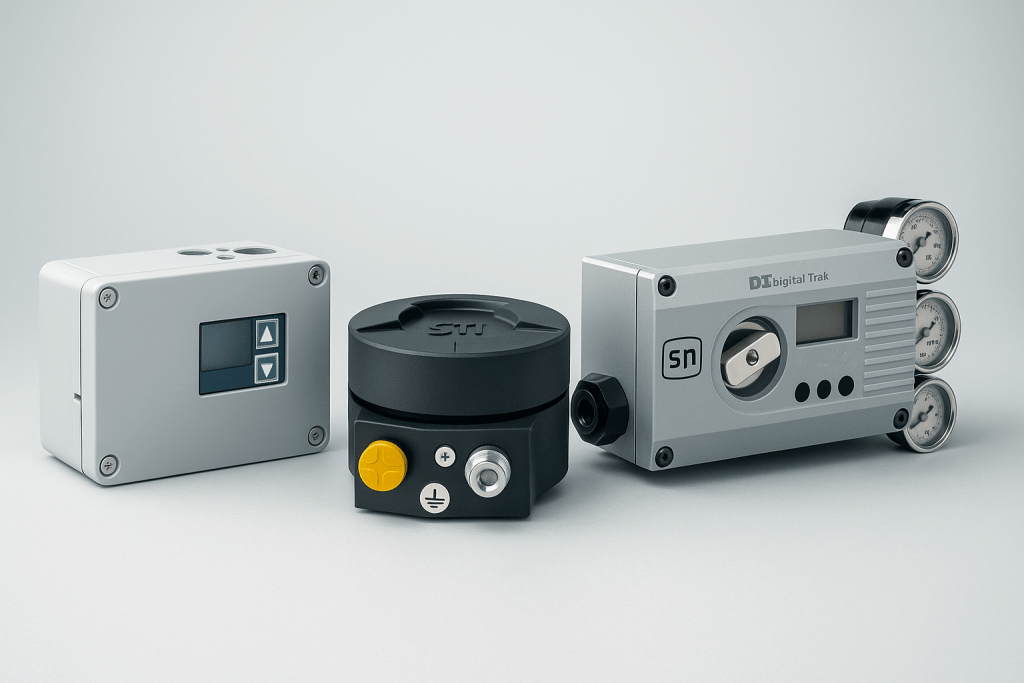
Modern smart valve positioners combine precise actuator control, digital communication, continuous diagnostics, and automated configuration functions within a single field device. By integrating position feedback, valve diagnostics, and automation connectivity, these systems help improve control loop performance, simplify commissioning, and support predictive maintenance strategies across industrial process applications.
Multi-Protocol Communication and Automation Connectivity
Supports 4–20 mA, HART, FOUNDATION Fieldbus, Profibus, Modbus, and other industrial communication protocols for integration with DCS, PLC, asset management, and plant-wide monitoring systems.
Accurate Electro-Pneumatic Valve Positioning
Closed-loop electro-pneumatic control continuously adjusts actuator movement to maintain accurate valve travel, reduce overshoot, and improve response consistency under dynamic operating conditions.
Flexible Configurations for Diverse Control Strategies
Analog, digital, electro-pneumatic, and intelligent positioner architectures support modulating control valves, severe-service applications, and advanced process automation requirements.
Continuous Valve Diagnostics and Condition Monitoring
Encoder-based position feedback, travel monitoring, friction analysis, and actuator diagnostics provide continuous visibility into valve condition and long-term performance trends.
Protection for Corrosive and Hazardous Process Environments
Aluminum and SS316 housings with IP66 and NEMA 4X protection support outdoor installations, corrosive process conditions, and hazardous-area industrial environments.
Standardized Mounting and Actuator Compatibility
NAMUR and IEC 60534 mounting standards simplify integration with rotary actuators, linear actuators, and a broad range of industrial control valve platforms.
Automated Calibration and Rapid Commissioning
Auto-calibration routines, self-configuration functions, and setup diagnostics reduce commissioning effort while improving positioning accuracy and startup consistency.
Local Monitoring, Configuration, and Troubleshooting
Integrated displays and local interfaces provide direct access to operating parameters, diagnostic information, alarm status, calibration settings, and maintenance functions at the field device level.
In many automation systems, process instability originates from valve travel deviation, actuator non-linearity, or mechanical friction rather than controller malfunction alone. Consequently, accurate valve positioning, continuous diagnostics, and digital communication capabilities become essential for maintaining long-term control performance and asset reliability.
Valve Positioner Selection Criteria for Process Control Applications
Control valve performance depends not only on the valve itself, but also on how effectively the valve positioner matches actuator characteristics, process requirements, automation architecture, and diagnostic objectives. Proper positioner selection improves loop stability, positioning accuracy, asset reliability, and long-term integration within modern process control systems.
Selection based on valve type, actuator architecture, travel characteristics, operating torque requirements, and dynamic response behavior to ensure accurate positioning performance.
Evaluation of process conditions including pressure, temperature, control strategy, response requirements, and expected operating range to optimize control loop stability.
Compatibility with DCS, PLC, and digital automation platforms using 4–20 mA, HART, FOUNDATION Fieldbus, Profibus, and Modbus communication environments.
Diagnostic requirements including valve condition monitoring, travel feedback, predictive maintenance capabilities, and asset management integration.
Environmental and certification considerations including hazardous-area classification, ATEX or IECEx requirements, ingress protection, and corrosive service conditions.
Support for new projects, shutdown maintenance programs, retrofit upgrades, replacement initiatives, and long-term lifecycle management using IMI smart valve positioner technologies.
In many modulating applications, unstable control performance originates from mismatched actuator dynamics, valve characteristics, or inadequate position feedback rather than controller configuration alone. Consequently, selecting the correct valve positioner is an important factor in achieving long-term process stability, diagnostic visibility, and asset reliability.
Define Your Valve Positioner and Shutdown System Requirements
Stable process control and reliable shutdown performance depend on selecting the correct valve positioner architecture, actuator configuration, communication platform, and diagnostic strategy. Providing detailed application information helps align valve automation performance, Partial Stroke Testing (PST) functionality, and functional safety objectives with actual operating conditions.
• Valve type, actuator design, travel range, and operating characteristics
• Application type (modulating control, on/off isolation, ESD valve, or SIS final element)
• Automation platform and communication protocol (4–20 mA, HART, FOUNDATION Fieldbus, Profibus, Modbus)
• Existing control issues including oscillation, hysteresis, dead band, travel deviation, or slow actuator response
• Functional safety requirements including SIL targets, shutdown logic, and proof-testing strategy
• Diagnostic expectations, maintenance philosophy, and Partial Stroke Testing (PST) requirements
In many automation systems, control instability and shutdown reliability issues originate from actuator behavior, valve dynamics, or limited diagnostic visibility rather than the valve body itself. Proper positioner selection and testing strategy help improve process performance, asset reliability, and functional safety compliance.
Discuss Your Application