
Reliable Solutions
Engineered Valve Actuation Systems for Reliable Process Control
The Right Actuator Defines Valve Performance — Not Just Operation
Incorrect actuator sizing or selection can lead to unstable control, excessive wear, or failure under critical conditions. Therefore, actuation must be engineered based on real process behavior—not just torque values.
At Nordenflow, we match actuation systems to valve type, operating conditions, and control requirements to ensure reliable performance, proper integration, and long-term system stability.
Applied across industrial valve automation projects in Finland and the EU
Need help selecting the right actuator for your valve?
Request Actuator SelectionGet sizing, configuration, and fail-safe definition based on your process conditions.
Actuator Selection Approach
Actuator selection depends on valve behavior, required torque, and system safety conditions. In practice, incorrect selection leads to unstable control, slow response, or failure in critical operations.
Therefore, actuator selection must align with valve type, process conditions, and control requirements—not treated as a standalone component.
Applied across industrial valve automation projects throughout Finland and the EU.
Pneumatic Actuation
Used for fast, reliable valve control in standard industrial applications where compressed air is available.
→ Best for simple, cost-effective automation with fast response, but limited when precise positioning or high torque is required.
Electric Actuation
Designed for precise, repeatable control with seamless integration into automation systems.
→ Best for applications requiring accuracy and remote control, but slower response compared to pneumatic systems.
Hydraulic & Electro-Hydraulic
High-force actuation systems for demanding applications and safety-critical valve operation.
→ Best for high torque and fail-safe operation, but requires more complex systems and maintenance.
Gas-over-Oil Systems
Autonomous actuation systems for pipeline valves, designed for reliable operation with fail-safe shutdown capability under critical conditions.
→ Best for remote pipelines and autonomous operation, but limited to specific infrastructure conditions.
Response Time
RFQ responses typically within 24–48 hours including technical review.
Engineering Support
Actuator sizing, torque calculation, and fail-safe configuration included.
Project Scope
Supply includes actuator, accessories, and full integration support.
Regional Support
Supporting industrial valve automation projects across Finland and the EU.
Engineering Scope
Actuator selection requires more than torque calculation. It must consider valve behavior under differential pressure, dynamic loads, and interaction with control systems and safety functions.
In practice, incorrect actuator sizing or configuration can result in incomplete valve travel, unstable control loops, or failure during emergency shutdown. Therefore, each parameter must be validated against real operating conditions and relevant engineering standards.
Torque Requirements
Breakaway torque under maximum differential pressure defines initial actuator sizing. However, dynamic torque, seating forces, and friction variation must also be considered to ensure full stroke completion.
Typically evaluated according to EN 15714-3 and manufacturer torque curves, including safety factors for worst-case conditions.
Mechanical Interface & Mounting
Misalignment or incorrect coupling design can introduce side loads, leading to premature wear or mechanical failure. Proper interface design ensures torque transmission without stress concentration.
ISO 5211 mounting standards provide compatibility, but correct shaft sizing and coupling design remain critical.
Fail-Safe Design
Fail-safe function must guarantee valve movement to a defined position within a required response time. This is critical in ESD systems where delayed or incomplete closure can lead to safety risks.
Defined according to SIL requirements (IEC 61508 / IEC 61511) and validated through functional testing such as partial stroke testing (PST).
Control & Operation Logic
Actuator speed, positioning accuracy, and hysteresis must match control loop dynamics. Poor matching can cause oscillation, overshoot, or slow response in modulating systems.
Integration with PLC/DCS systems typically involves 4–20 mA signals, fieldbus protocols, or digital positioners depending on control requirements.
Operating Environment
Environmental conditions such as temperature extremes, corrosion, and hazardous areas directly influence actuator design, sealing, and material selection.
Compliance with ATEX, IP ratings, and material specifications ensures reliability under harsh operating conditions.
Compliance & Certification
Certification ensures actuator performance under defined safety and operational requirements, but correct system integration remains essential to achieve expected reliability.
Common standards include EN 15714, API specifications, SIL certification, and project-specific technical requirements.
Actuator performance is not defined by specifications alone. It must be validated against valve dynamics, process conditions, and safety requirements to ensure reliable operation.
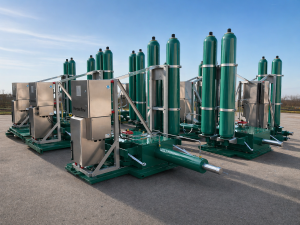
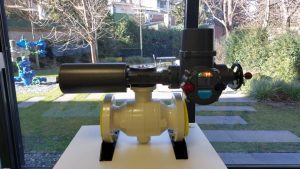
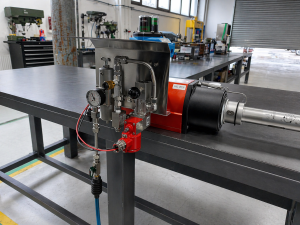
Actuation Solutions Based on Real Operating Conditions
In many applications, actuator selection is not limited to torque sizing. It also depends on fail-safe behavior, response time, and how the actuator interacts with valve dynamics and control systems.
As a result, using the wrong actuation approach can lead to slow shutdown, unstable control, or failure in critical scenarios such as ESD or remote operation.
At Nordenflow, actuation solutions are engineered based on valve behavior, process conditions, and system requirements—ensuring reliable integration and predictable performance.
We typically support questions such as:
- Which actuator type fits my valve and operating conditions?
- How should fail-safe configuration be defined?
- What are the risks of incorrect actuator sizing?
- Which solution works for remote or no-power applications?
Supporting valve automation projects across Finland and the EU.
What Happens After You Submit an RFQ?
Your valve data and process conditions are reviewed to define torque and actuation requirements.
We define the appropriate actuator type, fail-safe configuration, and control setup.
You receive a clear technical proposal including configuration, scope of supply, and delivery terms.
Define Your Actuation Solution
Submit your valve data — we deliver a matched actuator concept based on real operating conditions.
Request Actuator SelectionNo complete specifications required.