
Releble Solutions
Triple Offset Butterfly Valves for Severe Service and Zero Leakage
Reliable shutoff under high temperature, high pressure, and critical operating conditions
Conventional valve designs often fail under extreme temperature, pressure, and sealing requirements.
In such conditions, triple offset butterfly valves provide reliable shutoff with minimal leakage and long-term durability.
At Nordenflow, we engineer these valves based on sealing geometry, material behavior, and thermal stress conditions.
As a result, systems maintain sealing integrity and operational reliability in severe service environments.
Engineers typically select triple offset butterfly valves when tight shutoff and durability outweigh the need for continuous flow modulation.
Performance is defined by sealing geometry, material selection, and resistance to thermal and mechanical stress, ensuring consistent operation in demanding environments.
When You Need Triple Offset Butterfly Valves
Engineers select triple offset butterfly valves when sealing reliability and durability under extreme conditions cannot be compromised.
In such applications, leakage, thermal stress, and pressure variation can significantly impact system performance.
Tight Shutoff is Critical
Leakage must be minimized or eliminated under demanding operating conditions.
High Temperature or Pressure
Conventional soft-seated valves cannot withstand these operating conditions.
Severe Service Conditions
Systems operate under thermal stress, pressure cycling, or aggressive media.
Metal Seated Requirements
Durability and resistance to wear are prioritized over soft sealing performance.
As a result, selecting an unsuitable valve type in these conditions can lead to leakage, thermal damage, or premature failure.
What We Supply
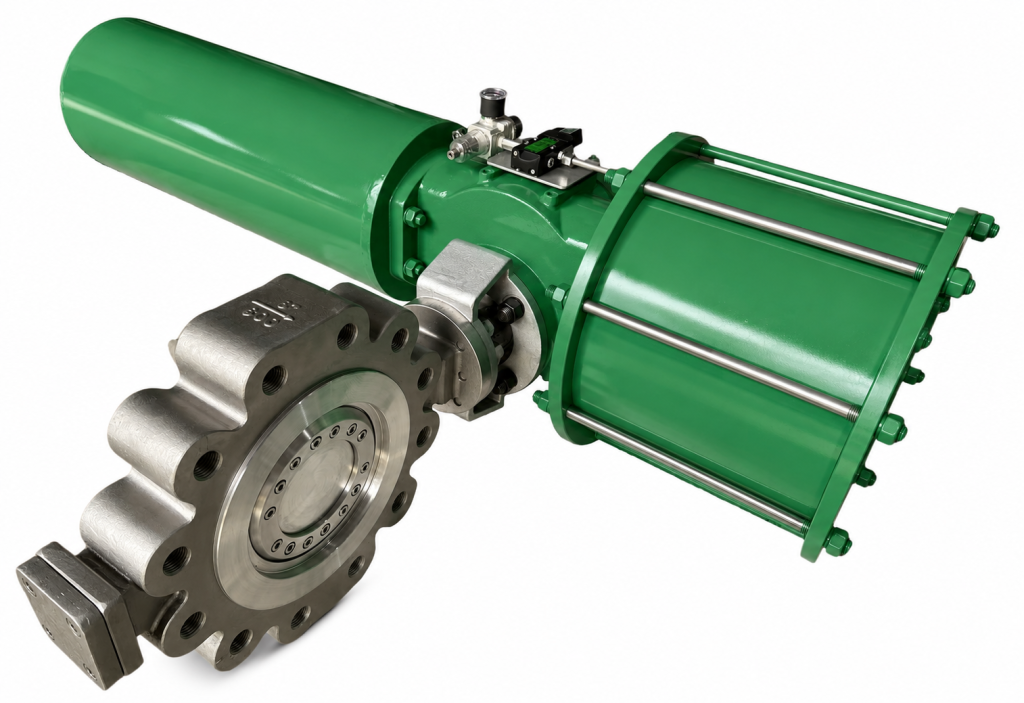
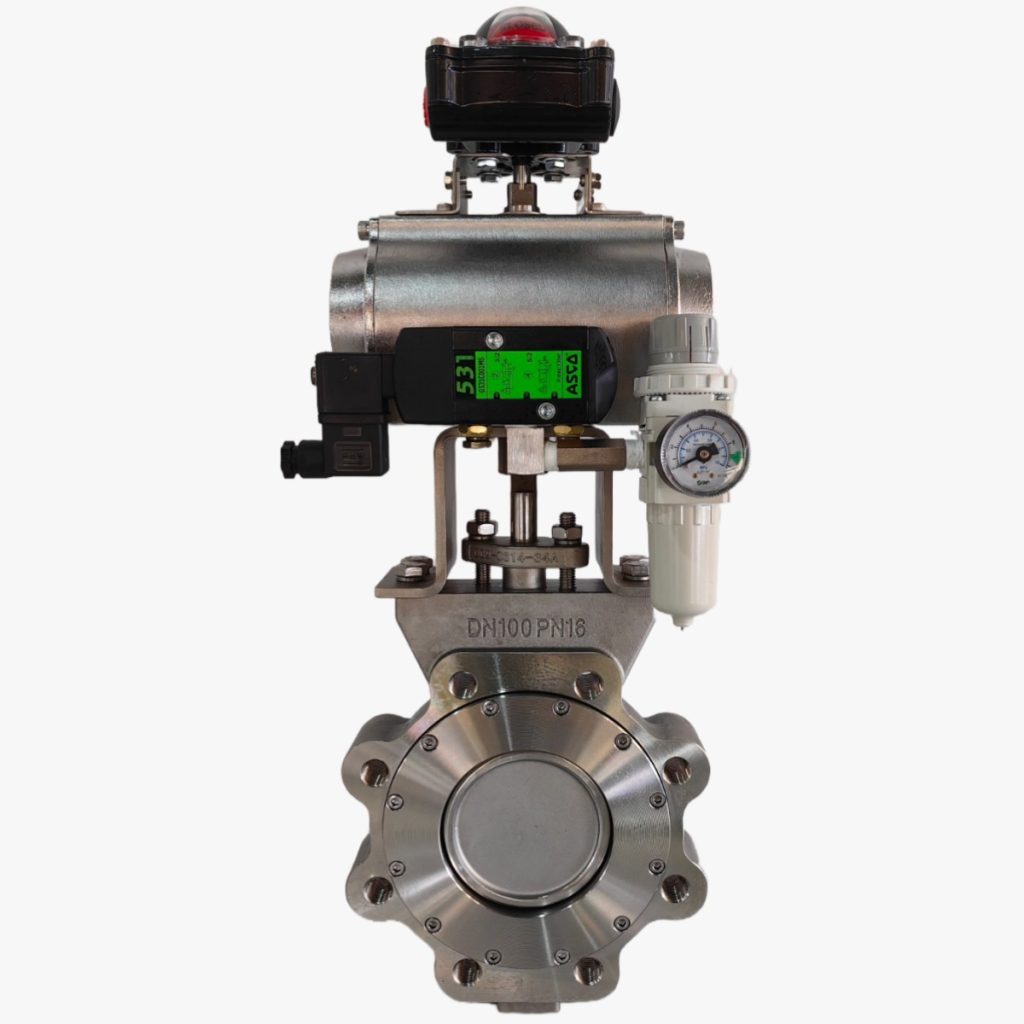
We deliver triple offset butterfly valve solutions engineered for severe service conditions, where tight shutoff and long-term reliability are critical.
In practice, performance depends on sealing geometry, material behavior, and resistance to thermal and mechanical stress.
Valve and Actuation Package
Complete valve assemblies with pneumatic, electric, or hydraulic actuation for reliable operation under critical conditions.
Metal Seated Sealing Design
Advanced sealing geometry ensures tight shutoff with minimal wear under high temperature and pressure.
High-Performance Materials
Materials withstand thermal stress, corrosion, and aggressive media in severe service environments.
Triple Offset Geometry
The design minimizes friction during operation, which reduces wear and maintains sealing performance over time.
High Pressure and Temperature Capability
Configured for elevated pressure and temperature where conventional valve designs cannot perform reliably.
System Integration
Integrated into plant systems with appropriate control, safety, and operational requirements.
As a result, each solution is configured based on temperature, pressure, and sealing requirements to ensure long-term reliability in severe service conditions.
Engineering Scope
Triple offset butterfly valve performance is defined by sealing geometry, material behavior under temperature, and stability under pressure and mechanical stress.
In practice, these factors determine whether the valve can maintain sealing integrity under severe service conditions.
Sealing Geometry
Sealing geometry defines how the valve performs under high temperature and pressure conditions.
Thermal Behavior
Material selection ensures stable behavior under thermal expansion and mechanical stress.
Pressure and Mechanical Stability
Valve construction withstands pressure cycling and mechanical loads without compromising sealing performance.
As a result, sealing reliability under temperature and pressure variation becomes the primary factor when selecting valves for severe service applications.
Features & Standards
These features define how the valve performs under severe service conditions, including high temperature, high pressure, and demanding sealing requirements.
Sizes: DN50 – DN1200 (2″ – 48″)
Pressure Classes: PN10 – PN160 / ASME Class 150 – 900
Seating: Metal-to-metal sealing
Leakage Class: Up to Class VI (depending on design)
Materials: Carbon steel, stainless steel, duplex, high-temperature alloys
Trim: Hardened sealing surfaces
Design Standards: API 609, ASME B16.34
Testing: API 598
Fire Safe: API 607 / API 6FA (optional)
Certifications: ATEX, PED, SIL (as required)
End Connections: Wafer, Lug, Flanged, Butt-weld
Actuation: Pneumatic, Electric, Hydraulic
In practice, selecting the correct combination of materials, sealing design, and standards ensures reliable performance in high temperature and high pressure applications.
Applications
In severe service environments, sealing failure can lead to safety risks, efficiency loss, or unplanned shutdowns.
Therefore, triple offset butterfly valves are selected for applications requiring tight shutoff, high temperature resistance, and long-term reliability.
Oil & Gas — Isolation and Critical Service
Isolation in pipelines and processing units where leakage is unacceptable and operational reliability is essential.
Refineries — High Temperature Service
High-temperature hydrocarbon processes where soft-seated valves cannot maintain sealing performance.
Power Plants — Steam and Energy Systems
Steam isolation and control where temperature and pressure demand robust metal sealing performance.
LNG and Gas Processing
Critical gas systems requiring reliable shutoff under fluctuating temperature and pressure conditions.
Chemical Processing — Aggressive Media
Corrosive or aggressive fluids where material durability and sealing integrity are critical.
General Severe Service Applications
Systems where high temperature, pressure, and sealing reliability directly affect operational performance.
Triple Offset vs Globe vs Segment Ball — How to Choose
Valve selection depends on whether the priority is precise control, high flow capacity, or reliable shutoff under severe operating conditions.
In practice, selecting the wrong valve type can result in leakage, unstable control, or reduced system efficiency.
Triple Offset Butterfly Valve
Designed for severe service applications requiring tight shutoff and reliable sealing under high temperature and pressure.
→ Best for zero leakage, metal sealing, and critical isolation
Globe Control Valve
Provides precise flow control and stable modulation across varying process conditions.
→ Best for high accuracy and control loop stability
Segment Ball Valve
Suitable for high flow capacity and reliable operation with slurry, fibers, or contaminated media.
→ Best for high flow, low pressure drop, and difficult media
When sealing reliability under extreme conditions is critical, triple offset butterfly valves are typically preferred. In contrast, globe valves are selected for precision control, while segment ball valves are better suited for high flow capacity and challenging media.
Therefore, valve selection should be based on whether sealing integrity, flow control accuracy, or flow capacity is the primary system requirement.
Verify Valve Performance for Severe Service Conditions
Submit your operating data to evaluate whether a triple offset butterfly valve can ensure reliable shutoff under your process conditions.
In critical applications, incorrect valve selection can lead to leakage, thermal damage, or unplanned shutdowns. We help you prevent these risks.
Supporting industrial projects across Finland and the EU.
• Operating temperature and pressure range
• Fluid type and service conditions
• Required leakage class or shutoff performance
• Valve size and connection type
• Fire-safe, safety, or certification requirements