
Innovative Solutions
Process Safety & Critical Valve Applications
Critical valve applications are expected to perform when they are needed most. Achieving that confidence requires more than compliant components—it depends on appropriate engineering, verified performance, and lifecycle practices that help safety functions remain ready throughout their operational life.
Process Safety Philosophy
Process Safety Depends on More Than Compliance
Meeting functional safety requirements is only one part of achieving dependable process safety. Critical valve applications must continue to perform under demanding operating conditions, respond correctly when required and maintain their intended safety function throughout the asset lifecycle.
Effective process safety combines sound engineering, appropriate technologies, performance verification and lifecycle management to reduce operational risk and strengthen confidence in safety-critical valve applications. Rather than focusing on individual components, successful strategies evaluate how the complete shutdown function performs when a demand occurs.
Applicable to Emergency Shutdown Systems (ESD), Safety Instrumented Systems (SIS), shutdown valves, HIPPS, critical on-off valves, partial stroke testing (PST), proof testing and other safety-related valve automation applications across the process industries.
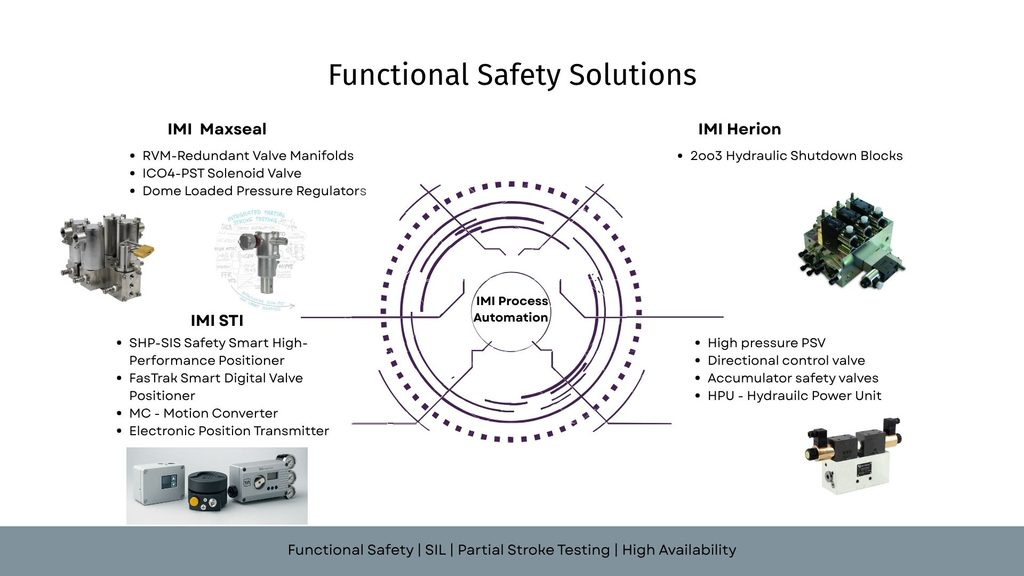
Functional Safety Challenges
Why Critical Valve Applications Require Special Engineering Attention
Critical valve applications perform the final action in many Safety Instrumented Functions (SIFs), making their performance essential to reducing process risk. Unlike continuously operating control equipment, these valves are often required to operate only when abnormal conditions occur. IEC 61511 therefore places significant emphasis on lifecycle activities such as verification, proof testing and performance assessment to maintain confidence that the safety function will operate correctly when demanded.
Safety Functions Operate Only When Demanded
Emergency Shutdown (ESD), High Integrity Pressure Protection Systems (HIPPS) and other Safety Instrumented Functions may remain inactive for extended periods. Their readiness cannot be assumed simply because no demand has occurred.
Hidden Failures Reduce Safety Integrity
Mechanical degradation, actuator problems, instrument faults or loss of air supply can remain undetected until the final element is required to perform its safety function.
Proof Testing Supports Functional Safety
IEC 61511 identifies proof testing as an essential lifecycle activity for detecting dangerous undetected failures and maintaining confidence in Safety Instrumented Functions throughout operation.
Partial Stroke Testing Improves Visibility
Partial Stroke Testing (PST) provides additional diagnostic coverage by verifying valve movement without interrupting production, helping identify developing failures before a real shutdown demand occurs.
Lifecycle Activities Sustain Performance
Functional safety continues throughout the operational lifecycle. Inspection, maintenance, verification, modification management and periodic assessment all contribute to maintaining the intended safety performance.
Confidence Requires More Than Compliance
Achieving process safety depends not only on compliant equipment but also on engineering decisions, verification practices and lifecycle management that ensure safety functions remain capable of responding when required.
Functional Safety Lifecycle
Effective Process Safety Extends Throughout the Lifecycle
IEC 61511 defines functional safety as a lifecycle activity rather than a one-time design exercise. Achieving dependable performance from Safety Instrumented Functions (SIFs) requires appropriate engineering during design, verification of safety performance throughout operation and continuous maintenance of the final elements responsible for executing the safety function.
Design
Functional safety begins with defining the Safety Instrumented Function, selecting appropriate final elements, configuring fail-safe behaviour, determining SIL requirements and ensuring compliance with IEC 61511 throughout the engineering design process.
Verify
Proof testing, Partial Stroke Testing (PST), functional testing and periodic assessment help verify that dangerous undetected failures are identified and that Safety Instrumented Functions remain capable of performing on demand.
Maintain
Inspection, preventive maintenance, management of change, diagnostics and lifecycle reviews help sustain the integrity of critical valve applications and support long-term compliance with the IEC 61511 functional safety lifecycle.
Engineering Elements
Critical Valve Applications Depend on More Than the Valve
A critical valve application is an engineered safety function rather than a single component. Achieving the required Safety Integrity Level (SIL) in accordance with IEC 61511 depends on the coordinated performance of the final element, actuator, instrumentation, shutdown logic, diagnostic strategy and lifecycle verification activities. When these elements operate as an integrated system, confidence in the Safety Instrumented Function (SIF) is significantly improved.
Final Element Assembly
The valve, actuator and mechanical accessories operate together as the final element of the Safety Instrumented Function. Proper sizing, fail-safe configuration and mechanical integrity are fundamental to dependable shutdown performance.
Instrumentation & Diagnostics
Solenoid valves, position monitoring, pressure switches, limit switches and Partial Stroke Testing (PST) contribute to diagnostic coverage while supporting proof testing activities required throughout the IEC 61511 lifecycle.
Safety Logic & Functional Integration
Reliable shutdown depends on coordinated interaction between the logic solver, field instrumentation and final elements. Functional integration verifies that every component responds correctly when the Safety Instrumented Function is initiated.
Verification & Proof Testing
Functional testing, proof testing, SAT, FAT and Partial Stroke Testing verify that dangerous undetected failures are identified and that shutdown functions continue to achieve their intended performance throughout operation.
Redundancy & Operational Availability
Architectures incorporating Redundant Valve Manifolds (RVM), redundant solenoid arrangements and high-availability shutdown configurations help reduce spurious trips while maintaining the integrity of critical safety functions.
Lifecycle Performance
Inspection, preventive maintenance, management of change (MoC), periodic assessment and performance reviews support long-term compliance with the IEC 61511 functional safety lifecycle while maintaining confidence in critical valve applications.
Typical Applications
Critical Valve Applications Across the Process Industries
Critical valve applications are used wherever industrial processes require dependable isolation, emergency shutdown or pressure protection. Although each application has different operating conditions and risk profiles, all rely on properly engineered Safety Instrumented Functions, appropriate verification activities and lifecycle management in accordance with IEC 61511.
Emergency Shutdown (ESD) Valves
Designed to move the process to a safe state during abnormal operating conditions by providing rapid and dependable isolation when a shutdown demand occurs.
High Integrity Pressure Protection Systems (HIPPS)
High-integrity isolation systems designed to prevent overpressure events while reducing reliance on conventional pressure relief systems.
Blowdown & Vent Systems
Critical valve assemblies used to depressurize process equipment safely during emergency situations or planned operational procedures.
Critical Isolation Valves
Isolation duties where valve performance directly influences personnel safety, environmental protection or production continuity.
Compressor & Pipeline Shutdown Systems
Emergency isolation applications protecting compressors, gas transmission systems and pipeline infrastructure during abnormal operating events.
Process Safety Applications
Applied across refineries, LNG facilities, petrochemical plants, chemical processing, offshore platforms, power generation and other safety-critical industrial environments.
Lifecycle Confidence
Maintaining Confidence Throughout the Functional Safety Lifecycle
Functional safety does not end after commissioning. IEC 61511 defines operation, maintenance, proof testing, periodic assessment and management of change as essential lifecycle activities that help ensure Safety Instrumented Functions continue performing as intended throughout the life of the facility.
Proof Testing Strategy
Periodic proof testing detects dangerous undetected failures and helps maintain the probability that Safety Instrumented Functions will operate correctly when a demand occurs.
Partial Stroke Testing
Partial Stroke Testing (PST) improves diagnostic coverage while minimizing process interruption, supporting more effective lifecycle verification of shutdown valves.
Performance Diagnostics
Valve signatures, actuator diagnostics and operating data provide valuable information about developing degradation before safety performance is compromised.
Management of Change
Process modifications, equipment replacement and operational changes should be evaluated to ensure Safety Instrumented Functions continue meeting their intended performance requirements.
Knowledge & Insights
Expand Your Understanding of Functional Safety
Functional safety is supported by engineering knowledge as much as by technology. Explore practical articles covering Safety Instrumented Systems (SIS), proof testing, shutdown architectures and engineering practices that help improve confidence in critical valve applications throughout their lifecycle.
Why Is SIL Required in Safety Instrumented Systems?
Balancing SIL 3 Safety Compliance and Plant Availability in Critical Shutdown Systems
Read Article →How Do You Know a Redundant Shutdown System Has Lost Its Redundancy?
Explore hidden failures, redundant valve manifolds (RVM), diagnostic coverage and why redundancy should be periodically verified.
Read Article →Partial Stroke Testing: Improving Shutdown Valve Confidence
Learn how Partial Stroke Testing (PST) increases diagnostic coverage while reducing operational disruption in critical shutdown applications.
Read Article →Engineering Consultation
Discuss Your Critical Valve Application
Whether you are reviewing an existing Safety Instrumented Function, planning a shutdown valve upgrade or evaluating proof testing strategies, Nordenflow supports engineering teams with practical expertise in functional safety, valve automation and lifecycle performance for critical industrial applications.
Start an Engineering Discussion