
RELEABLE Solutions
Fluid Control and Process Valves for Industrial Automation Systems
Process Valve Technologies for Controlled Fluid Handling and Industrial Automation
Process Fluid control valves manage the movement of liquids, gases, steam, compressed air, and process media throughout industrial automation systems. Different valve technologies are developed to operate under specific pressure conditions, media characteristics, temperature ranges, and switching requirements.
Nordenflow supplies IMI Norgren and IMI Buschjost fluid control valve technologies for industrial automation and process applications, supporting reliable media handling across utility systems, process lines, steam services, filtration equipment, and automated production environments.
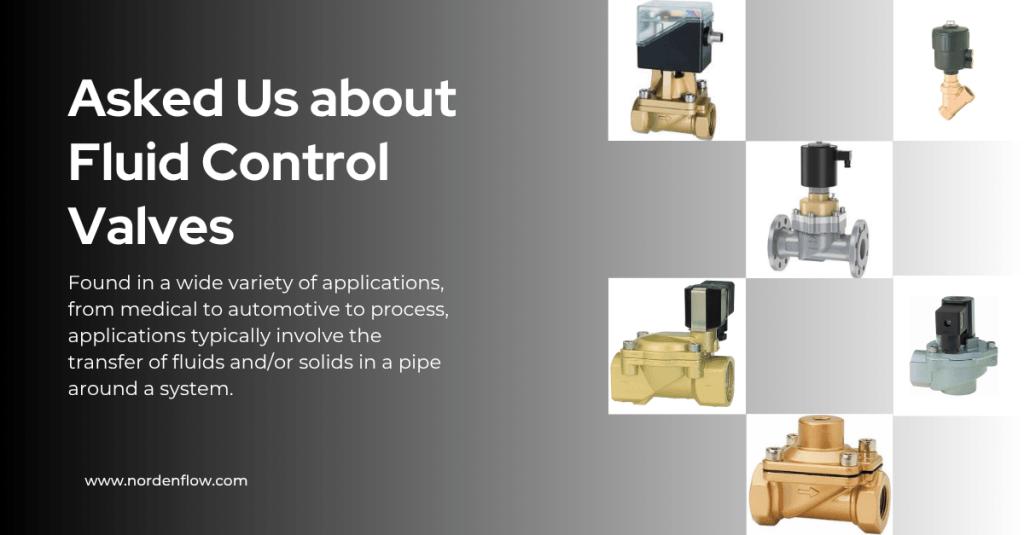
When Fluid Control Valves Become Necessary
Fluid control valves are applied where process media must be started, stopped, diverted, or regulated under defined operating conditions. As process demands become more demanding, valve technology selection is influenced by media behaviour, operating environment, and the required response of the process rather than by connection size or pressure rating alone.
Media Conditions Influence Valve Operation
Clean fluids, steam, compressed air, corrosive chemicals, viscous products, and contaminated media create different operating demands that cannot be addressed effectively by a single valve technology.
Process Conditions Extend Beyond Normal Service
Elevated temperatures, pressure variation, continuous cycling, and demanding operating environments require valve technologies designed for those specific service conditions.
Automated Process Operation Is Required
Automated production systems require valves capable of responding consistently to control commands while maintaining stable process operation throughout repeated operating cycles.
Application Demands Differ Across Process Systems
Steam distribution, chemical processing, utility networks, filtration systems, and industrial manufacturing each impose different operating requirements that influence the choice of valve technology.
Fluid Control Valve Technologies
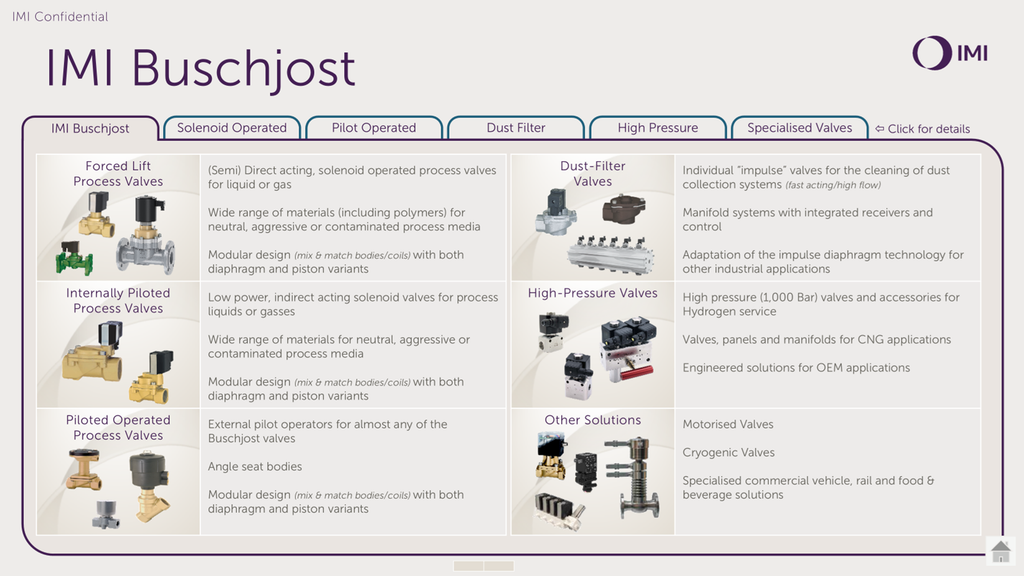
Industrial fluid handling covers a wide range of operating conditions that cannot be addressed by a single valve design. Different valve technologies are developed to manage specific combinations of media characteristics, switching behaviour, pressure conditions, and process requirements.
Angle Seat Valves
Applied where steam service, elevated temperatures, frequent operating cycles, or contaminated media influence valve performance.
Solenoid Diaphragm Valves
Used for automated control of clean liquids and gases operating within defined pressure conditions and repeatable switching cycles.
Pressure Operated Valves
Selected where process pressure is utilised to operate the valve under demanding service conditions.
Solenoid Flange Valves
Integrated into larger process pipelines where automated shut-off and higher flow capacity are required.
Motorised Valves
Applied where controlled valve movement is preferred over rapid switching to suit the operating characteristics of the process.
Pulse Jet and Dust Filter Valves
Developed for repetitive compressed-air pulse operation in industrial filtration and dust collection systems.
Engineering Evaluation Before Selecting a Fluid Control Valve
The most of engineering thinking, Fluid control valve selection begins by eliminating technologies that cannot satisfy the operating conditions of the process. Engineering evaluation therefore focuses on the conditions that define valve suitability before model selection, connection size or manufacturer are considered.
Process Medium Assessment
The physical and chemical characteristics of the process medium establish the first boundary for valve technology selection. Clean fluids, steam, contaminated liquids, corrosive chemicals and viscous media impose different demands on internal flow paths, sealing elements and body construction, eliminating unsuitable technologies before detailed specification begins.
Pressure Profile Evaluation
Engineering review should consider maximum operating pressure together with minimum and available differential pressure throughout the operating cycle. These conditions determine whether direct-acting, pilot-operated or pressure-operated valve principles can function consistently.
Flow Capacity Assessment (Cv / Kv)
Required flow capacity should be evaluated against actual process demand rather than nominal pipe size. Cv and Kv values should provide the required flow while maintaining acceptable pressure loss, stable operation and sufficient control margin under expected operating conditions.
Temperature Envelope
Continuous operating temperature, thermal cycling and occasional temperature excursions influence seal materials, body construction and actuator compatibility. Temperature limits should be evaluated across the complete operating envelope rather than under normal operating conditions alone.
Operating Duty Assessment
Expected switching frequency, pulse operation, continuous cycling and operating duration determine wear mechanisms and maintenance intervals. Valve technologies should be assessed against actual operating duty instead of theoretical design life.
Installation and Connection Requirements
Available installation space, piping configuration, mounting orientation, connection standards and maintenance access may restrict the range of practical valve technologies regardless of their hydraulic suitability.
Lifecycle Expectations
Engineering evaluation should consider inspection intervals, seal replacement, service accessibility and expected operational lifetime. Selecting a valve technology that aligns with maintenance strategy can reduce unplanned intervention and simplify lifecycle support.
Typical Engineering Selection Scenarios
Process Fluid control valve technology is selected according to operating conditions rather than industry alone. The following examples illustrate how engineering priorities change across typical industrial applications and how those priorities influence the selection of valve technology.
HVAC Chilled Water Systems
Operating Conditions
Variable flow, low differential pressure, continuous operation.
Engineering Consideration
Insufficient differential pressure may prevent some pilot-operated valves from operating consistently.
Technology Direction
Direct-acting or motorised valve technologies should be evaluated.
Steam Distribution
Operating Conditions
High temperature, condensate formation, repetitive switching.
Engineering Consideration
Thermal cycling and steam service accelerate seal degradation and influence valve construction requirements.
Technology Direction
Angle seat valve technologies are commonly evaluated for this duty.
Dust Collection Systems
Operating Conditions
Compressed air, rapid pulse discharge, high switching frequency.
Engineering Consideration
Valve response time and repetitive cycling determine cleaning efficiency and maintenance intervals.
Technology Direction
Pulse jet valve technologies are typically considered.
Chemical Process Lines
Operating Conditions
Aggressive media, continuous service, corrosion exposure.
Engineering Consideration
Chemical compatibility often becomes the primary constraint before pressure or flow capacity are evaluated.
Technology Direction
Valve technologies compatible with the process medium should be assessed first.
Smart Building Utilities
Operating Conditions
Low noise, energy-efficient operation, frequent control adjustments.
Engineering Consideration
Smooth valve movement and stable operation can contribute to system efficiency and occupant comfort.
Technology Direction
Motorised valve technologies are commonly evaluated for these applications.
Engineering Technology Comparison
Different valve technologies are developed around different operating principles rather than performance rankings. The comparison below highlights how each technology responds to common engineering considerations encountered during fluid control valve selection.
| Engineering Factor | Solenoid Diaphragm Valve | Angle Seat Valve | Motorised Valve |
|---|---|---|---|
| Operating Principle | Direct-acting or pilot-operated solenoid actuation. | Pneumatic piston-operated linear movement. | Electric actuator drives controlled valve movement. |
| Differential Pressure | Pilot-operated versions require adequate differential pressure. | Valve movement is generally independent of line differential pressure. | Not dependent on differential pressure for actuator operation. |
| Steam Service | Limited by seal materials and temperature rating. | Well suited for saturated and high-temperature steam duties. | Application dependent and typically used in utility systems. |
| Contaminated Media | Best suited to relatively clean process media. | Handles contaminated and viscous media more effectively. | Performance depends primarily on valve body construction. |
| Response Characteristic | Rapid switching. | Fast linear actuation. | Controlled movement suitable for modulation. |
| Continuous Cycling | Suitable within coil and duty limitations. | Designed for demanding cyclic service. | Depends on actuator duty rating. |
| Pressure Shock | Rapid closure should be evaluated. | Operating speed may require review in some systems. | Controlled movement can reduce hydraulic shock. |
| Installation Envelope | Compact installation footprint. | Requires actuator clearance above the valve. | Requires sufficient actuator mounting space. |
This comparison focuses on the principal valve technologies most frequently evaluated during industrial fluid control projects. Pressure-operated valves, solenoid flange valves and pulse jet valves follow the same engineering evaluation principles but are typically selected for more specialised operating conditions and application-specific duties.
Engineering Review Snapshot
The following review snapshot illustrates how a single process condition can influence engineering evaluation before a valve technology is selected. It reflects the sequence typically discussed during technical design reviews rather than a product recommendation.
This snapshot represents a typical engineering review sequence. Actual technology selection depends on the combined evaluation of process medium, pressure profile, operating duty, thermal conditions and installation constraints.
Typical Process Environments and Engineering Priorities
Fluid control valve technologies are applied across many industries, but the engineering priorities behind their selection differ significantly. The process environment often determines which operating characteristics deserve the greatest attention during technology evaluation.
| Process Environment | Primary Engineering Challenge | Technologies Commonly Evaluated |
|---|---|---|
| HVAC & Smart Buildings | Variable differential pressure, energy efficiency, quiet operation and compact plantroom installation. | Motorised valves, solenoid diaphragm valves. |
| Steam & Thermal Utilities | Thermal cycling, condensate handling, elevated temperature and continuous duty. | Angle seat valves, pressure-operated valves. |
| Chemical Processing | Media compatibility, seal integrity and resistance to corrosive process fluids. | Pressure-operated valves, diaphragm valve technologies. |
| Dust Collection & Filtration | High-frequency pulse operation, compressed air efficiency and repetitive switching. | Pulse jet valves. |
| Water & Utility Networks | Stable flow isolation, long service intervals and predictable operating behaviour. | Solenoid diaphragm valves, motorised valves. |
| Industrial Automation Systems | Fast response, repeatable switching and integration with automated process control. | Solenoid valves, pressure-operated valves. |
The same valve technology may be appropriate in different industries for entirely different engineering reasons. Process conditions—including pressure behaviour, temperature profile, media characteristics and operating duty—remain the primary drivers of technology evaluation.
For applications requiring higher flow capacity with compact solenoid control, indirect solenoid actuated diaphragm valves use a pilot-operated mechanism in which process differential pressure assists diaphragm movement.
Start with the Process, Not the Valve
Valve technology selection begins with understanding the operating conditions rather than comparing product catalogues. Sharing key process information allows the engineering evaluation to focus on operating behaviour, process constraints and technology suitability before detailed product specification.
✓ Process medium and fluid characteristics
✓ Operating and differential pressure
✓ Temperature range and operating duty
✓ Required valve function and actuation method
✓ Installation constraints or existing operational concerns
The initial discussion focuses on process conditions and engineering evaluation. Product specification and sizing follow after the operating requirements have been reviewed.