Reliable Solutions
Electric Valve Actuators for Precise Control and Automated Operation
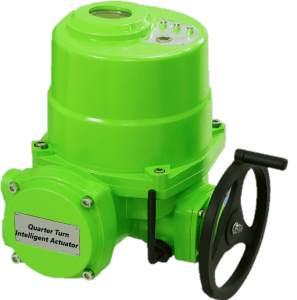
Intelligent Electric Actuation for Critical Valve Automation
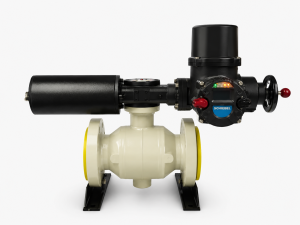
Electric actuators are selected for applications requiring precise valve positioning, stable modulation, and integration with modern automation systems. They provide controlled operation without compressed air infrastructure and support accurate response under varying process conditions.
Nordenflow supports electric actuation solutions configured for process automation, fail-safe operation, and reliable performance across industrial valve applications.
When Electric Actuators Are the Right Choice
Electric actuators are selected when positioning accuracy, stable modulation, and automation integration are more critical than high-speed shutdown or purely mechanical fail-safe operation.
In modern process systems, intelligent electric actuation combines precise valve control with advanced automation architecture. However, actuator performance still depends on power reliability, control logic, and proper configuration under real operating conditions.
High Positioning Accuracy
Suitable for modulating applications requiring stable positioning and repeatable valve response under varying process conditions.
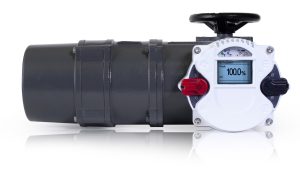
CM Series actuators are commonly applied in intelligent control and automation systems requiring compact multi-turn electric actuation.
Stable Automation & Control Integration
Integrated electronics and digital positioning enable seamless communication with PLC, DCS, and distributed automation systems.
Smartcon control platforms support advanced automation integration, parameter configuration, and operational feedback.
No Compressed Air Infrastructure
Suitable for installations where pneumatic infrastructure is unavailable, unstable, or impractical to maintain.
Remote & Automated Valve Operation
Frequently used in unmanned stations and automated process systems requiring remote control, position feedback, and stable operation.
Heavy-Duty & Severe Service Conditions
High torque requirements, severe service duty, and demanding operating environments may require reinforced actuator architecture and robust gearbox design.
Heavy-duty AB Series actuator platforms are designed for high-load and critical process applications.
When Standard Electric Actuation May Not Be Sufficient
Conventional electric actuators may not provide guaranteed fail-safe response during total power loss or emergency shutdown scenarios without dedicated failsafe architecture.
Electrical failsafe actuator systems are applied where defined valve positioning is required during emergency conditions or SIL-related shutdown functions.
As a result, intelligent electric actuators are widely used in water treatment, power generation, process automation, and critical industrial systems where control stability and automation integration are prioritized.
Engineering Scope
Intelligent electric actuator performance depends on torque behavior, motor duty cycle, control architecture, and power reliability under real operating conditions. Unlike pneumatic systems, actuator response is directly influenced by electrical load, positioning logic, and automation integration.
Incorrect actuator sizing or control configuration can result in thermal overload, unstable modulation, positioning drift, or failure during critical operating scenarios such as voltage interruption or emergency shutdown conditions.
Torque Behaviour & Valve Dynamics
Actuator sizing must consider breakaway torque, dynamic loading, seating forces, and valve friction under maximum differential pressure. Incorrect torque margins can reduce positioning stability or prevent complete valve travel.
CM Series actuator platforms support configurable torque ranges for modulating and automation-critical valve applications.
Duty Cycle & Thermal Protection
Continuous modulation and high operating frequency increase motor thermal load. Duty cycle classification must match process behavior to prevent overheating, reduced actuator lifetime, or unexpected shutdown.
Heavy-duty AB Series architectures are designed for high-load and severe service operating conditions.
Control Stability & Positioning Accuracy
Positioning performance depends on actuator feedback systems, tuning logic, and interaction with the process control loop. Poor configuration can lead to oscillation, overshoot, or unstable modulation behavior.
Automation Integration & Communication
Integration with PLC and DCS architecture requires stable communication, accurate feedback, and reliable parameter management across automation systems.
Smartcon intelligent control systems support fieldbus communication, actuator diagnostics, and advanced automation integration.
Environmental & Hazardous Area Conditions
Temperature limits, ingress protection, vibration, and hazardous area classification directly affect actuator reliability and enclosure selection in industrial environments.
Electrical Fail-Safe Architecture
Conventional electric actuators may require additional architecture to ensure defined valve positioning during power loss or emergency shutdown conditions.
Electrical failsafe actuator systems are applied where SIL-related shutdown functions or guaranteed fail-position logic are required.
Intelligent electric actuator performance depends on the interaction between valve dynamics, automation architecture, and power stability — not on torque output alone.
What We Deliver
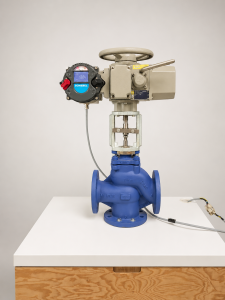
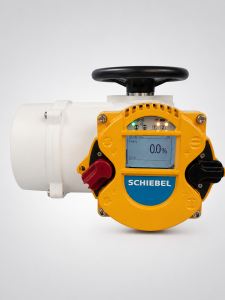
Nordenflow delivers intelligent electric actuation solutions engineered around valve dynamics, automation architecture, and operating reliability — not standard actuator selection alone.
The objective is not only actuator operation, but stable positioning, predictable response behavior, and reliable valve control under real process conditions.
Intelligent Actuator Architecture
Selection of quarter-turn and multi-turn actuator platforms based on torque behavior, valve characteristics, and required automation functionality.
CM Series electric actuators support compact intelligent automation and precise modulating applications.
Automation & Control Integration
Integration with PLC and DCS systems includes positioning control, communication protocols, feedback logic, and stable actuator response under automation conditions.
Smartcon intelligent control systems support advanced configuration, diagnostics, and fieldbus communication architecture.
Heavy-Duty & Severe Service Solutions
High-load applications and severe service conditions require reinforced gearbox architecture, stable torque delivery, and reliable actuator performance under continuous operating stress.
AB Series actuator platforms are designed for demanding industrial and high torque valve applications.
Environmental & Functional Safety Design
Actuator configuration is aligned with hazardous area classification, ingress protection requirements, environmental exposure, and project-specific safety philosophy.
Torque Validation & Valve Matching
Actuator sizing is verified against valve torque curves, seating forces, and dynamic load behavior to ensure complete valve travel and stable operation throughout the stroke.
Electrical Fail-Safe Configuration
In critical shutdown applications, defined valve positioning during power interruption may require dedicated electrical failsafe architecture or stored energy systems.
Electrical failsafe actuator systems are applied where SIL-related shutdown integrity or emergency positioning logic is required.
Each electric actuation solution is engineered to balance valve dynamics, automation integration, and operating reliability across real industrial process conditions.
Applications
Electric actuators are applied where stable valve positioning, intelligent automation, and reliable operation without compressed air are required.
In many systems, the actuator is integrated directly into plant automation architecture, where positioning accuracy, communication reliability, and predictable response behavior become critical for process stability.
Modulating Control Applications
Applied in control loops requiring stable positioning, repeatable valve movement, and accurate modulation under varying process conditions.
Common in process control, dosing systems, thermal regulation, and automated flow control applications.
Water & Wastewater Automation
Used in treatment plants and distribution systems where remote operation, automation integration, and low-maintenance valve control are required.
Remote & Unmanned Installations
Suitable for installations without pneumatic infrastructure where remote diagnostics, actuator feedback, and autonomous operation are required.
Smartcon control architecture supports intelligent monitoring and automation communication.
Power Generation & Utility Systems
Applied in auxiliary and balance-of-plant systems where actuator reliability, stable positioning, and integration with plant control systems are critical.
Heavy-Duty Industrial Valve Automation
Used in demanding industrial applications requiring reliable torque delivery, reinforced actuator architecture, and stable operation under high mechanical load.
Heavy-duty actuator platforms are applied in severe service and large valve automation systems.
Electrical Fail-Safe Applications
Applied where defined valve positioning must be maintained during power interruption or emergency shutdown conditions without pneumatic infrastructure.
Electric actuator selection is increasingly driven by automation architecture, positioning stability, and intelligent control integration — not only by valve torque requirements.
Not Every Valve Application Should Use Electric Actuation
Electric actuators are selected when positioning stability, intelligent automation, and integrated control architecture are critical. However, actuator selection should always be based on process behavior, shutdown philosophy, and infrastructure limitations — not actuator type alone.
In applications requiring ultra-fast shutdown, autonomous fail-safe operation, or stored energy systems, pneumatic, hydraulic, or electro-hydraulic solutions may provide more suitable operating reliability.
Reliable actuator selection depends on the interaction between valve dynamics, automation requirements, safety logic, and operating conditions — not on control method alone.
Nordenflow supports actuator selection across electric, pneumatic, hydraulic, electro-hydraulic, and gas-over-oil systems based on real operating conditions.
Selecting the Right Actuation Architecture
Electric, pneumatic, and hydraulic actuation systems are selected based on valve dynamics, shutdown philosophy, control stability, and operating reliability under real process conditions.
In practice, incorrect actuator architecture can result in unstable modulation, delayed emergency shutdown, incomplete valve travel, or loss of fail-safe integrity during power or pressure interruption.
Operating Requirements & Actuation Behavior
| Operating Requirement | Electric | Pneumatic | Hydraulic / Electro-Hydraulic |
|---|---|---|---|
| Modulating Control Stability | High positioning accuracy with intelligent feedback and automation integration | Dependent on air pressure stability, positioner tuning, and air quality | Stable under load but typically less optimized for fine modulation applications |
| Emergency Shutdown Response | Requires dedicated electrical failsafe architecture or backup systems | Fast response with spring-return fail-safe capability | Very fast with high force output and stored hydraulic energy systems |
| High Torque Valve Applications | Suitable within motor and gearbox limitations | Limited in very high torque or severe service conditions | Preferred for large valves, high differential pressure, and severe service operation |
| Automation & Remote Diagnostics | Advanced automation integration with intelligent diagnostics and fieldbus communication | Requires additional pneumatic accessories and instrumentation | Integration complexity depends on hydraulic control architecture |
| Operational Dependency | Dependent on stable electrical supply and control signal integrity | Dependent on compressed air stability and contamination control | Dependent on hydraulic system integrity, fluid condition, and leakage management |
| Typical Application Focus | Intelligent automation, modulating control, and remote operation | ESD systems, fast isolation, and high-cycle valve operation | Severe service valves, critical shutdown systems, and high-force applications |
Electric actuators are preferred where intelligent automation, stable modulation, and remote diagnostics are critical. Pneumatic and hydraulic systems are typically selected where shutdown speed, stored energy fail-safe operation, or high torque performance are the primary requirements.
Selecting an unsuitable actuation architecture can compromise shutdown reliability, control stability, actuator lifetime, and overall valve performance under real operating conditions.
Define the Suitable Actuation Architecture
Not sure which actuation architecture fits your system? Share your valve data and operating conditions to evaluate the suitable solution based on valve behavior, shutdown philosophy, and operating requirements.
Request Actuator SelectionNo complete data package required — evaluation is based on real operating conditions and valve behavior.