
Technology Areas
Understanding The Systems Behind Industrial Performance
Operational Understanding
Better Technology Decisions Start With Better Operational Understanding
Looking beyond individual components to understand how valve automation, flow control, instrumentation and digital monitoring technologies are applied to improve reliability, strengthen process safety and increase operational visibility across critical process systems.
Before selecting technologies, it is essential to understand how a system actually operates. Operating conditions, process requirements, safety functions and available utilities all influence how technologies should be applied and how effectively they will perform in service.
Valve type, size, pressure class and torque requirements influence valve automation, actuator sizing and flow control strategies.
Operating mode, cycle frequency, response time and process demands help determine the most suitable actuation and control technologies.
Fail-safe logic, ESD functions and compliance requirements influence automation architecture and safety-related technology decisions.
Instrumentation interfaces, monitoring requirements and operational data needs define how visibility, diagnostics and performance insights are generated.
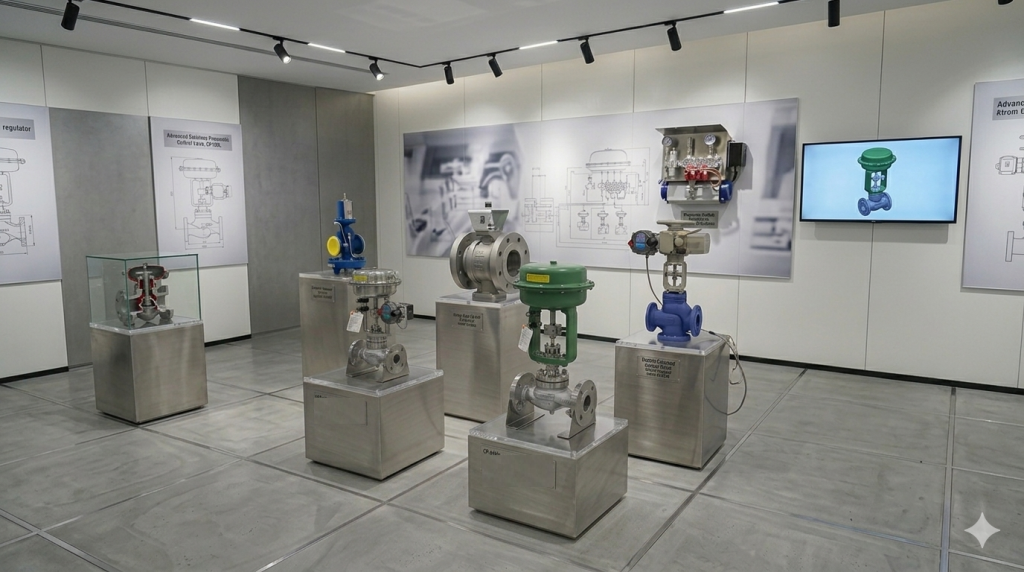
Technology Areas
Four Technology Areas. One Objective.
Automation, flow control, instrumentation and digital monitoring technologies applied to improve reliability, process safety and operational visibility across critical process systems.
Valve Actuation
When torque, speed and fail-safe performance define how critical valves operate.
- Electric, pneumatic, hydraulic and gas-over-oil actuators
- On/off, modulating and ESD applications
- Torque sizing, speed control and duty-cycle matching
- Isolation and shutdown valves
- Control valve actuation
- Pipeline and process automation
Flow Control
When flow stability, pressure management and process performance are critical.
- Globe, segment ball and triple-offset butterfly valves
- Control, isolation and severe-service applications
- Integrated valve automation packages
- Flow regulation and control loops
- High-pressure and high-temperature service
- Critical process systems
Instrumentation & Control
When control logic, signal management and safety functions must operate reliably.
- Solenoid valves, regulators and air preparation units
- Positioners, PST devices and ESD solutions Redundant Valve Manifolds (RVM)
- Control panels and automation assemblies
- Actuator control and signal interfaces
- Safety and shutdown systems
- Industrial fluid and pneumatic systems
Digital Monitoring & IIoT
When operational visibility and asset condition insights support better maintenance and operating decisions.
- Wireless sensors for vibration, pressure, position, temperature and flow
- Asset condition monitoring and performance tracking
- IIoT-enabled operational data collection and visibility
- Asset performance monitoring
- Condition-based maintenance programs
- Remote monitoring of critical process systems
Lifecycle-Focused Thinking
Before Replacing Assets, Ask Better Questions
Performance challenges do not always originate from the asset itself. In many cases, operational limitations are linked to outdated automation, limited visibility, aging instrumentation or evolving process requirements. Understanding these factors often reveals opportunities to improve performance before replacement becomes necessary.
Understand
Evaluate operating conditions, control requirements, maintenance history and performance expectations before defining a solution.
Improve
Apply automation, flow control, instrumentation and monitoring technologies where they create measurable operational value.
Extend
Increase asset value, strengthen operational performance and support longer service life before replacement becomes necessary.
Explore technologies aligned with your operational objectives, modernization priorities and asset performance goals.
Discuss Your Application