
RELEBEL Solutions
Industrial Solenoid Valves for Automation Systems
Industrial Solenoid Valves for Valve Automation Systems
Solenoid valves provide the switching interface between electrical control signals and pneumatic actuator movement. Their selection influences actuator response, pressure transfer, switching repeatability, and integration within automated valve assemblies used throughout industrial process applications.
Selecting the correct solenoid valve extends beyond matching voltage, port size, or mounting style. Pilot arrangement, flow coefficient (Cv), operating pressure, response characteristics, environmental conditions, and actuator compatibility all contribute to predictable valve operation under normal and demand conditions.
This page focuses on the engineering principles behind industrial solenoid valve selection, switching behaviour, hazardous-area suitability, and integration with pneumatic valve automation systems. Product-specific information for the Maxseal ICO3S and ICO4S families is provided on their dedicated pages.
Engineering Conditions That Influence Solenoid Valve Performance
Solenoid valve performance depends on the operating conditions surrounding the valve rather than the component alone. Available pressure, actuator characteristics, switching requirements, installation environment, and mechanical integration establish the engineering constraints that determine valve selection and long-term operating performance.
Electrical Signal Conversion
The solenoid valve forms the interface between the control system and pneumatic actuator. Switching consistency depends on how accurately electrical commands are converted into controlled pressure routing.
Available Operating Pressure
Supply pressure and pressure differential determine whether direct-acting or pilot-operated valve designs are appropriate. Insufficient operating pressure may prevent reliable valve switching.
Actuator Air Demand
Actuator volume, required stroke time, and available Cv determine how efficiently pressure is delivered and exhausted during valve movement.
Installation Environment
Ambient temperature, vibration, moisture, corrosion, and hazardous-area classification influence enclosure selection, sealing materials, and certification requirements.
Mechanical Integration
Mounting arrangement, tubing layout, exhaust routing, and actuator interface affect installation complexity, maintenance accessibility, and switching efficiency.
System Modernization
Existing valve automation assemblies can often achieve improved switching performance by reviewing valve architecture and operating conditions before replacing the complete actuator package.
Solenoid Valve Operating Principles
Solenoid valve architecture determines how electrical energy is converted into pneumatic switching. Selecting the appropriate operating principle depends on available supply pressure, actuator configuration, switching philosophy, and installation requirements. Understanding these differences helps ensure the valve architecture matches the intended operating conditions before detailed component selection begins.
Direct-Acting Solenoid Valves
The solenoid coil moves the valve element directly without relying on system pressure. This design is suitable where little or no pressure differential is available and provides predictable switching for low-flow applications.
Pilot-Operated Solenoid Valves
Pilot-operated designs use supply pressure to assist valve movement, allowing higher flow capacity with lower electrical power consumption. Reliable operation depends on maintaining sufficient operating pressure.
Internal and External Pilot Arrangements
Internal pilot valves use the process supply pressure to operate the pilot stage, whereas external pilot designs receive pilot pressure from an independent source. External pilot arrangements are commonly selected when process pressure varies or cannot reliably operate the pilot mechanism.
Monostable Configurations
Monostable valves return automatically to their normal position when electrical power is removed. They are commonly applied where a predefined fail position is required following loss of control power.
Bistable Configurations
Bistable valves remain in their last switching position until a subsequent electrical command changes the valve state. This operating principle is suitable where position retention is required without continuous coil energization.
Engineering Consideration
Operating principle should be established before evaluating flow coefficient, hazardous-area certification, electrical characteristics, or product family. Matching the valve architecture to the application creates the foundation for reliable integration with the actuator and control system.
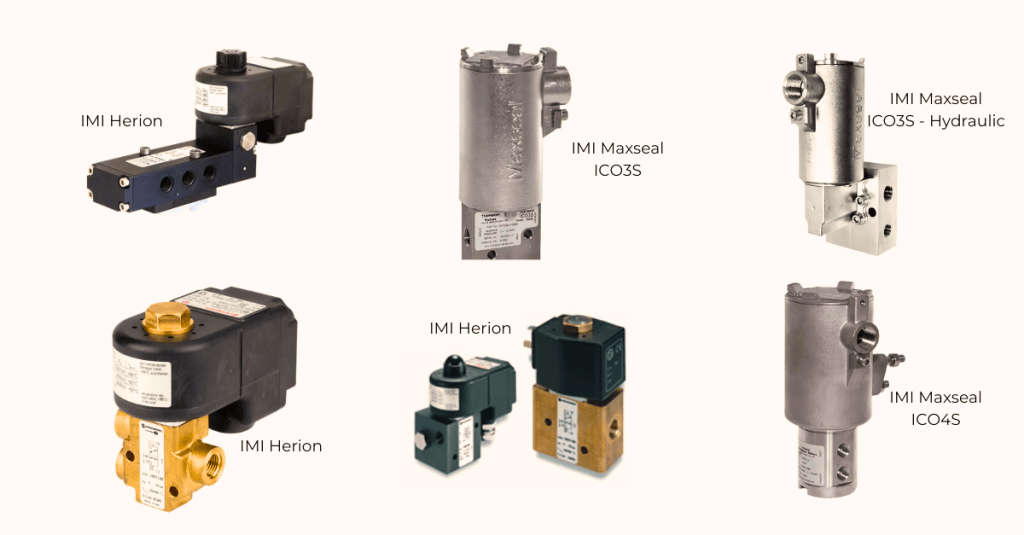
Typical Industrial Applications
Industrial solenoid valves are applied wherever electrical control signals must initiate, interrupt, or redirect pneumatic energy. Although the operating principle remains the same, the valve configuration, mounting method, and performance requirements vary according to the actuator package and operating duty.
On-Off Valve Automation
Solenoid valves control spring-return and double-acting pneumatic actuators installed on ball, butterfly, plug, and gate valves where reliable switching between open and closed positions is required.
Automated Valve Assemblies
Integrated actuator packages combine solenoid valves with position switches, positioners, air preparation equipment, and accessories to create compact valve automation solutions for process plants.
Emergency Shutdown Valves
Shutdown valve assemblies use solenoid valves to initiate pneumatic actuator movement when a shutdown command is received. System architecture and functional safety considerations are addressed separately within the Safety Instrumented System engineering pages.
Process Automation Equipment
Pneumatic switching is widely used on package equipment, utility systems, OEM machinery, and automated process units where dependable actuator control is required throughout normal operating cycles.
Hazardous Area Installations
Oil & gas, LNG, chemical processing, power generation, offshore, and other hazardous environments require valve assemblies that incorporate appropriately certified solenoid valves for the installation classification.
Retrofit and Modernization Projects
Existing actuator packages can often be upgraded by replacing or reconfiguring the solenoid valve while retaining the actuator and valve assembly, reducing project scope and installation downtime.
Engineering Comparison & Selection Guide
Solenoid valve selection begins by matching the valve function and installation method to the actuator and automation package. The comparison below summarizes the most common industrial configurations used in pneumatic valve automation systems.
| Configuration | Typical Application | Advantages | Engineering Considerations |
|---|---|---|---|
| 2/2 Valve | On/off media isolation | Simple shut-off function | Not intended for directional actuator control |
| 3/2 Valve | Spring-return actuators | Controls supply and exhaust through a single actuator port | Preferred where fail-safe actuator operation is required |
| 5/2 Valve | Double-acting actuators | Independent control of both actuator chambers | Requires two actuator connections |
| NAMUR Mounting | Direct actuator installation | Compact assembly with minimal tubing | Requires a compatible actuator interface |
| Inline Mounting | Remote valve installation | Flexible installation location | Additional tubing increases installation complexity |
| Manifold Mounting | Multiple valve assemblies | Shared air supply and simplified maintenance | Installation arrangement only, not a redundant valve architecture |
Engineering Recommendation
Establish the required valve function first, then select the mounting arrangement that best suits the actuator package and installation layout. Once these decisions are fixed, detailed evaluation of flow capacity, electrical characteristics, environmental certification, and product-specific features becomes more straightforward.
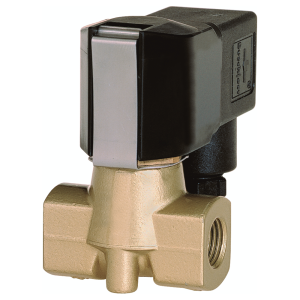
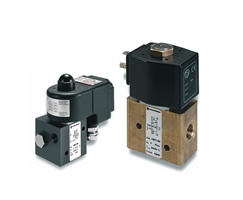
Explore Maxseal Solenoid Valve Families
Once the operating principle, valve function, and installation arrangement have been established, the next step is selecting a product family that matches the application’s performance requirements. The following Maxseal solenoid valves are commonly applied in industrial valve automation systems and are supported by Nordenflow with engineering selection and application guidance.
Maxseal ICO3S
The ICO3S family is widely used on spring-return pneumatic actuators where dependable switching, compact installation, and reliable venting are required. Its NAMUR-mounted design makes it suitable for valve automation packages installed in process plants, energy facilities, and hazardous industrial environments.
Typical Engineering Applications
- Emergency shutdown valve assemblies
- Quarter-turn valve automation
- Spring-return pneumatic actuators
- Hazardous-area installations
- General process automation systems
Maxseal ICO4S
The ICO4S family is intended for valve automation applications requiring increased pneumatic capacity, stable actuator control, and dependable operation under demanding process conditions. It supports larger actuator packages while maintaining compact integration with industrial automation systems.
Typical Engineering Applications
- Large pneumatic actuator packages
- Double-acting valve automation
- High air-demand applications
- Critical process isolation valves
- Heavy-duty industrial installations
Engineering Note: Product family selection should follow the engineering decisions discussed earlier on this page, including operating principle, valve function, mounting arrangement, actuator compatibility, and installation requirements. Detailed technical specifications, certifications, and configuration options are provided on the dedicated product pages.
Engineering Challenges & Practical Considerations
The following engineering discussions reflect practical questions encountered during design reviews, EPC projects, commissioning, shutdown planning, maintenance activities, and modernization of industrial valve automation systems.
Design Engineering
Can increasing solenoid valve Cv compensate for restrictions elsewhere in the pneumatic circuit?
Not always. Increasing Cv may improve airflow through the valve, but actuator ports, tubing diameter, fittings, exhaust capacity and actuator design frequently become the limiting factors. The entire pneumatic circuit should be evaluated before increasing valve size.
When should a pilot-operated solenoid valve be avoided even if it provides the required flow capacity?
Pilot-operated valves depend on sufficient operating pressure. Applications with unstable air supply, low differential pressure or intermittent pressure availability may require a direct-acting design despite its lower flow capacity.
When does a NAMUR-mounted valve offer an engineering advantage over an inline installation?
NAMUR mounting reduces tubing, leak paths and installation footprint while improving maintenance accessibility. Inline mounting remains preferable where installation flexibility or remote valve positioning is required.
Commissioning & Troubleshooting
Why does the actuator respond slowly even though the solenoid valve energizes correctly?
Electrical switching confirms only that the coil has been energized. Pneumatic pressure, exhaust restrictions, actuator friction, tubing arrangement, quick exhaust devices and actuator sizing should all be verified before concluding that the solenoid valve is responsible.
Why can identical solenoid valves produce different actuator stroke times?
Stroke time depends on the complete actuator package. Actuator air volume, spring characteristics, supply pressure, tubing configuration and exhaust capacity often have greater influence than the valve itself.
Which engineering checks should be completed before replacing a suspected faulty solenoid valve?
Verify supply pressure under operating conditions, coil voltage under load, pneumatic connections, manual override position, contamination, actuator movement and exhaust path before replacing the valve.
Reliability & Lifecycle
When does reducing coil power become an engineering advantage rather than simply an energy-saving measure?
Lower power coils can reduce cabinet heat, improve coil insulation life, decrease UPS loading and reduce power supply capacity requirements. The selected coil must still provide adequate magnetic force throughout the specified voltage and temperature range.
Does continuous coil energization reduce solenoid valve service life?
Continuous duty increases thermal loading on the coil and electrical insulation. Selecting the appropriate duty rating, ambient temperature limits and power management strategy can improve long-term reliability.
Can an existing valve automation package be improved without replacing the actuator?
Frequently. Reviewing valve configuration, tubing layout, pneumatic accessories and actuator integration often identifies opportunities to improve switching performance while retaining the installed actuator and process valve.
Standards & Project Compliance
Does ATEX certification alone satisfy hazardous-area project requirements?
No. Engineers should also verify equipment category, gas group, temperature class, ambient temperature limits, enclosure protection, cable entries and project-specific hazardous-area documentation before approving a replacement.
Which project documents should be reviewed before approving an alternative solenoid valve?
Review the valve datasheet, instrument index, hook-up drawing, cause-and-effect matrix, hazardous-area schedule, actuator documentation and project specifications to confirm technical compatibility before substitution.
Engineering Tip
During troubleshooting, replacing the solenoid valve should rarely be the first corrective action. Dynamic supply pressure, actuator air demand, tubing restrictions, exhaust capacity, manual override position, electrical supply under load and pneumatic accessories should all be verified before concluding that the valve itself is the source of the problem. This engineering approach often improves system reliability while avoiding unnecessary component replacement.
Discuss Your Valve Automation Requirements
Selecting an industrial solenoid valve involves more than matching voltage or port size. Actuator characteristics, pneumatic layout, operating pressure, installation constraints, hazardous-area requirements, and project specifications all influence the final engineering decision.
Engineering information that helps accelerate technical review:
- Valve and actuator datasheets
- Actuator type (spring-return or double-acting)
- Required valve function (2/2, 3/2 or 5/2)
- Operating pressure and available instrument air
- Required actuator stroke time
- Hazardous-area classification (if applicable)
- Existing pneumatic schematic or hook-up drawing
- Description of the operational issue or project objective
Engineering first. In many cases, improving switching performance does not require replacing the entire actuator package. Reviewing the pneumatic architecture, valve configuration, and installation details often identifies opportunities to improve reliability while retaining existing equipment.