
RELEABLE Solutions
Fluid Control and Process Valves for Industrial Automation Systems
High-Performance Fluid Control & Process Valves
Reliable flow control for liquids, gases, and aggressive media across industrial and process applications.
As an authorized distributor of :contentReference[oaicite:0]{index=0} in Finland, Nordenflow provides fluid control and process valve solutions designed for precise regulation of liquids, gases, and challenging media conditions.
These valves are engineered to operate reliably across a wide range of applications, from industrial process systems to specialized environments requiring chemical resistance, high pressure capability, or temperature stability.
Our portfolio supports handling of neutral media such as air and water, as well as aggressive substances including acids, alkalis, steam, and high-pressure fluids.
What We Supply
Process Control Valves
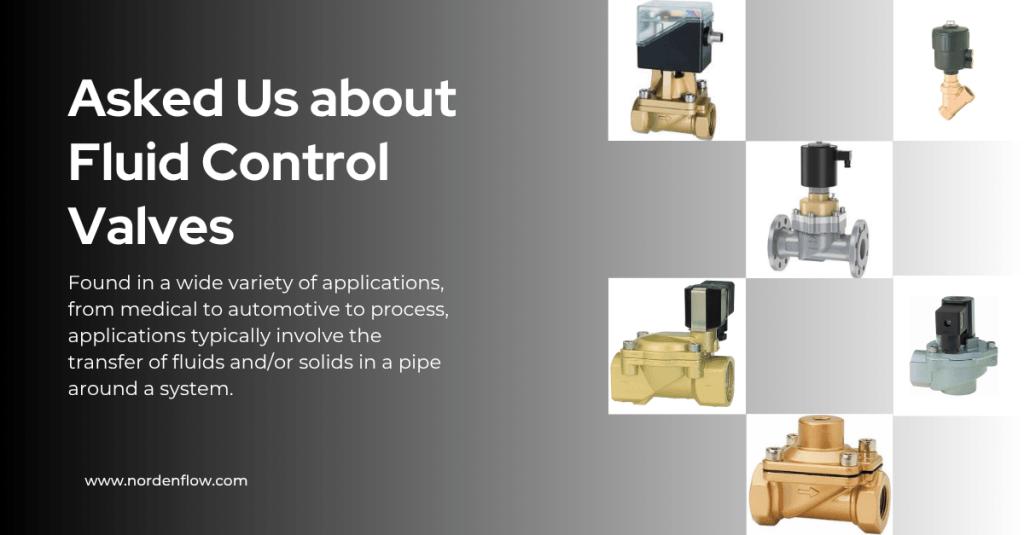
Angle seat valves and pressure-operated valves for industrial pipelines, designed for high flow rates and robust operation.
Solenoid-Actuated Valves
Indirect solenoid actuated diaphragm and flange valves for automated fluid control in industrial and process systems.
Motorised Control Valves
Electrically operated valves for controlled flow regulation and integration with automation systems.
Dust and Special Application Valves
Dust filter valves and specialized designs for handling particulate media and industrial filtration systems.
When You Need Fluid Control and Process Valves
Fluid control and process valves are required when precise handling of liquids, gases, or particulate media is critical for system performance, safety, or process stability.
When controlling flow of liquids, gases, or steam in industrial pipelines and process systems.
When handling aggressive or corrosive media such as acids, alkalis, or chemically active fluids.
When operating under high pressure, high temperature, or demanding environmental conditions.
When automated control is required using solenoid, pneumatic, or electric actuation.
When process reliability depends on stable and repeatable flow control performance.
Common across process industries, automation systems, and specialized applications requiring controlled media handling.
Product Overview
Angle Seat Valves
Designed for high-flow and contaminated media applications.
Media: Neutral, aggressive, steam, high viscosity
Material: Stainless Steel (316L), Bronze
Function: NC / NO / Double Acting
Operation: 2/2, 3/2
Port Size: G1/4 – G2
Dust Filter Valves
Optimized for pulse jet cleaning in dust collection systems.
Application: Dust collectors / filtration systems
Medium: Compressed air
Flow: High flow pulse discharge
Function: 2/2
Port Size: G1/2 – G1
Certifications: ATEX 3D / 3G
Indirect Solenoid Actuated Flange Valves
Designed for direct pipeline integration with high flow capacity.
Media: Liquids, gases
Material: Cast steel
Function: Normally Closed (NC)
Operation: 2/2
Pressure: 0 – 25 bar
Connection: DN15 – DN100
Indirect Solenoid Actuated Diaphragm Valves
Suitable for clean systems requiring pressure differential operation.
Standard: DIN EN 60730-2-8
Function: Normally Closed (NC)
Operation: 2/2
Pressure: 0.1 – 10 bar
Port Size: G1/4 – G1
Motorised Valves
Electrically driven valves for precise flow modulation.
Application: HVAC systems
Technology: Ceramic disc control
Medium: Liquids, gases
Function: 2/2
Port Size: G1/2 – G1
Feature: Low power consumption
Pressure Operated Valves
Externally piloted valves for controlled operation based on pressure signals.
Media: Liquids, gases
Operation: 2/2
Pressure: 0.2 – 16 bar
Actuation: Remote or solenoid pilot
Comparison Guide: Choosing the Right Process Valve
Selecting the correct valve depends on media type, pressure conditions, and control requirements. The following comparisons provide a quick engineering reference for choosing the right solution.
Diaphragm Valves vs. Angle Seat Valves
Suitable for clean, neutral liquids and gases at standard temperatures. Compact design with efficient flow performance.
Designed for steam, high temperatures, and contaminated or viscous media. The angled design reduces clogging and improves durability.
Solenoid Actuated vs. Pressure Operated
Best for systems with direct electrical control signals. Simple installation and fast operation, but sensitive to contaminated media.
Suitable for harsh environments and dirty or aggressive media. External pilot ensures reliable operation under demanding conditions.
Solenoid vs. Motorised Valves
Fast switching (milliseconds), ideal for rapid cycling applications. May cause pressure spikes in large systems.
Controlled opening and closing prevents water hammer and system stress. More efficient for long-duration operation.
Key Technical Comparison
Each valve type is designed for specific operating conditions. The comparison below highlights key performance differences to support correct selection.
| Feature | Diaphragm Valve | Angle Seat Valve | Motorised Valve |
|---|---|---|---|
| Response Time | Very fast (instant switching) | Fast | Slow, controlled movement |
| Steam Handling | Not suitable | Excellent (high temperature) | Suitable |
| Contaminated Media | Limited tolerance | Excellent (resistant to clogging) | Moderate |
| Lifecycle | High | Very high (robust design) | Moderate |
| Main Advantage | Compact and versatile | Handles high temperature and harsh media | Prevents water hammer and system stress |
Select the Right Valve for Your Application
Choosing the wrong valve can lead to performance issues, premature failure, or system instability. Share your application details to identify the correct valve type based on media, pressure, and operating conditions.
• Type of media (clean, contaminated, aggressive, steam)
• Operating pressure and temperature range
• Required valve function (on/off, modulating, pilot-operated)
• Control method (solenoid, pneumatic, electric)
• Installation type (pipeline size, connection type)
• Performance concerns (response time, durability, maintenance)