
Introduction
In the world of severe service automation, a Partial Stroke Test (PST) is often viewed merely as a “Pass/Fail” safety requirement. However, for modern process plants, the real value lies not in the test itself, but in the digital signature it leaves behind. At NordenFlow, we believe that moving from reactive testing to Predictive Maintenance is the key to reducing unplanned downtime. By analyzing the subtle shifts in valve behavior during a PST, engineers can detect mechanical fatigue months before a critical failure occurs.
The Power of the Valve Signature
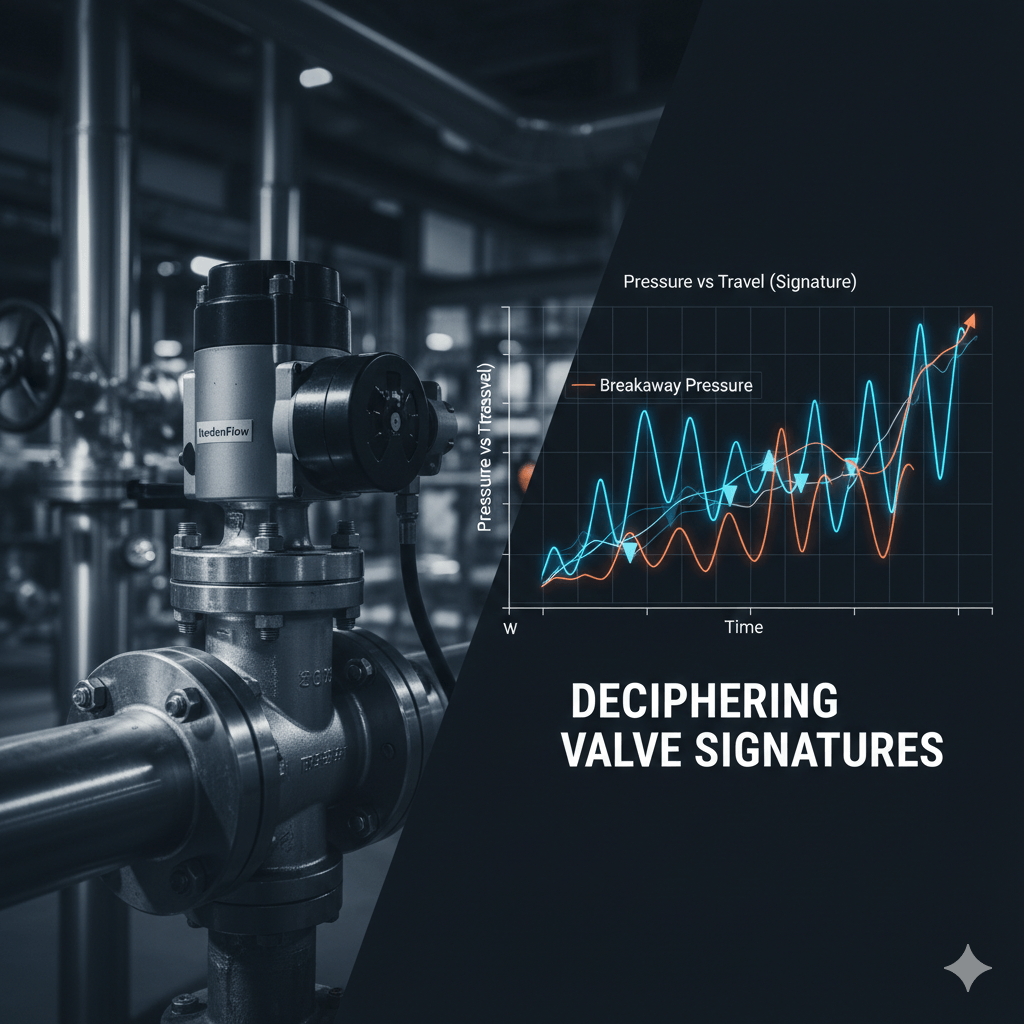
Every time a NordenFlow actuator performs a PST, the smart positioner records a unique “signature”—a graphical representation of pressure versus travel. When we look “beyond the basics,” we aren’t just checking if the valve moved; we are looking for deviations in the baseline:
Increased Breakaway Pressure: If the air pressure required to initiate movement is rising over time, it is a clear indicator of seat scarring or packing friction. In industries like Pulp & Paper, this often points to chemical buildup that will eventually jam the valve.
Response Lag (Hysteresis): A delay between the command and the physical movement suggests air supply restrictions or internal seal wear within the actuator.
Torque Fluctuations: Uneven movement during the stroke can signal a failing stem or a damaged rack-and-pinion gear, allowing you to schedule a replacement during a planned turnaround rather than a mid-cycle emergency.
Bridging Technology and Reliability
By leveraging high-performance NordenFlow actuation coupled with advanced diagnostic instrumentation, we provide our clients with more than just hardware. We provide a data-driven roadmap for their assets. Transitioning to this predictive model ensures that your Emergency Shutdown Valves (ESDVs) are not just compliant, but optimized for the long-term operational success of your facility.
| Feature | Basic PST | Advanced PST Analysis (NordenFlow) |
| Primary Goal | Confirm Valve Movement | Predict Component Failure |
| Data Usage | Logged as Pass/Fail | Trended over 6–12 months |
| Maintenance | Reactive (Fix when broken) | Proactive (Fix before failure) |
| Outcome | Safety Compliance | OPEX Reduction & Safety |