
Introduction to a functional Safety system
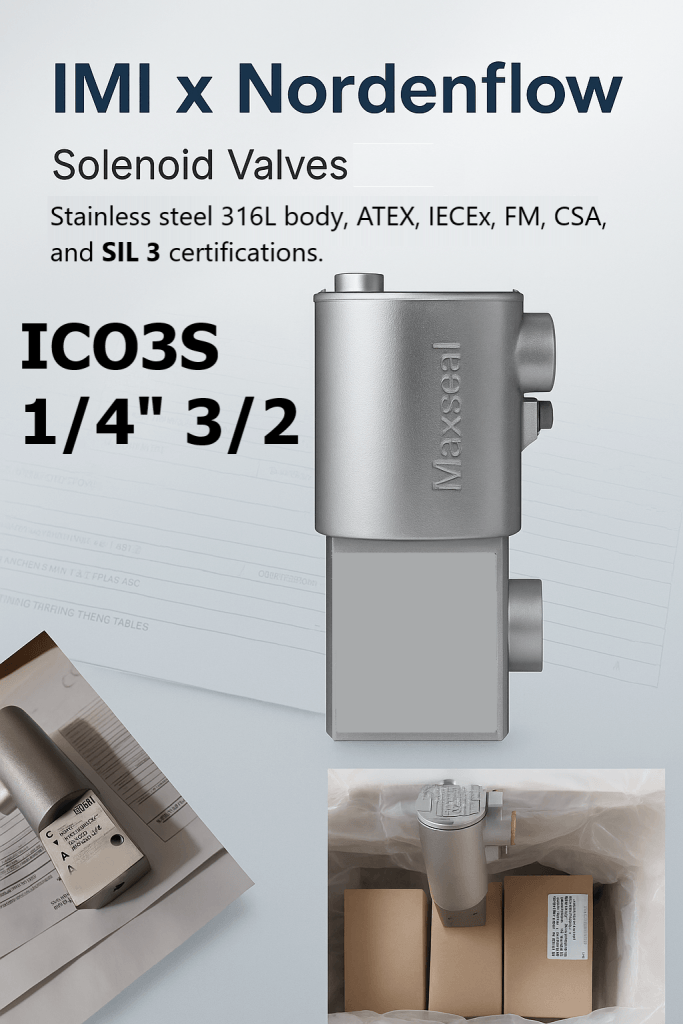
In a functional safety system, the solenoid valve is the critical link between the electronic safety logic (PLC) and the pneumatic actuator. A common mistake in the industry is focusing heavily on the valve and actuator while overlooking the solenoid’s role within the control panel. At NordenFlow, we ensure that the Safety Integrity Level (SIL) is maintained across the entire loop, preventing the solenoid from becoming the “weakest link.
Section 1: The Math of Safety (PFD_avg)
Explain that SIL is not just a badge on a product; it’s a calculation of the Average Probability of Failure on Demand.
– The NordenFlow Approach: We select solenoids with low PFD_avg values to ensure the total safety loop meets SIL 2 or SIL 3 requirements without compromise.
Section 2: Architecture Matters (1oo2 vs. 2oo2)
Discuss how solenoids are arranged inside your custom control panels:
– Redundancy: To increase reliability, we often implement 1oo2 (One out of Two) architectures. This ensures that if one solenoid fails, the other can still vent the actuator to bring the process to a safe state.
– Poppet vs. Spool: We prioritize Poppet-style solenoids in our panels because they are less prone to “stiction” after long periods of inactivity—a common cause of failure in safety systems.
Section 3: Environmental Protection in the Nordic Region
The control panel is the first line of defense against the elements.
Enclosure Engineering: NordenFlow panels protect SIL-rated solenoids from extreme cold and corrosive offshore air, ensuring that the internal components operate within their certified temperature ranges.