Innovative Solutions
Comprehensive Automation products for Industries
High-Performance Fluid Control & Process Valves
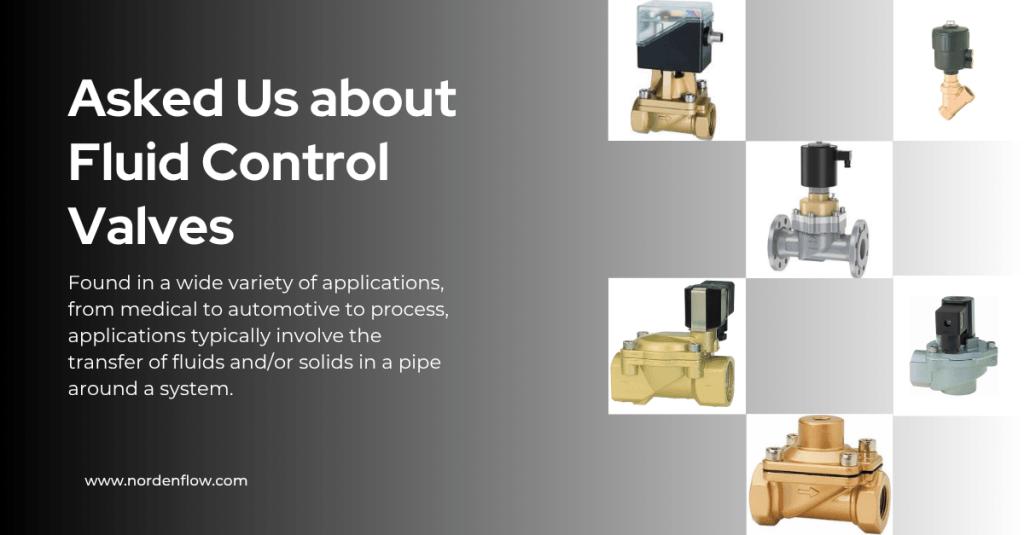
As an authorized Norgren distributor in Finland, we provide industry-leading solutions for regulating the flow of liquids, gases, and solids. Whether you are looking for Process Valves for industrial pipelines or precision Fluid Control Valves for medical equipment, our IMI Norgren portfolio delivers unmatched reliability and safety.
Our range of fluid control technology is engineered to handle a vast spectrum of media, including:
– Neutral Media: Compressed air, water, and industrial gases.
– Aggressive Substances: Acids, alkalis, and corrosive chemicals.
– Extreme Conditions: High-pressure fuels, steam, and cryogenic fluids.
Precision Engineering for Every Industry
From Automotive manufacturing to Life Sciences and Process Automation, Norgren valves are the gold standard for durability. By choosing a local Finnish distributor, you gain access to expert technical support, localized inventory, and fast delivery across the region.
- Interchangeable for NC, NO or double acting functions
- Suitable for contaminated flow fluids
- Valve operation: 2/2 , 3/2
- Port Size: G2-G1/4
- High flow rate
- Certifications: ATEX Category 3D/3G
- Valve operation: 2/2
- Port Size: G1, G3/4, G1/2
- Actuation: Solenoid pilot / Spring return
- Body material: Cast steel
- Function: NC
- Actuation: Solenoid pilot / Spring return
- Valve operation: 2/2
- Operating Pressure: 0 … 25 bar, 0 … 362 psi
Comparison Guide: Choosing the Right Norgren Process Valve
Selecting the correct valve depends on your media, pressure, and temperature. Below is a quick breakdown to help you decide which Norgren technology fits your Finnish industrial application.
1. Diaphragm Valves vs. Angle Seat Valves
Choose a Diaphragm Valve (e.g., 82400 Series) for clean, neutral liquids and gases at standard temperatures. They are compact, cost-effective, and provide a high flow rate for their size.
Choose an Angle Seat Valve (e.g., 82900 Series) if you are dealing with steam, high temperatures (up to 180°C), or contaminated/viscous media. The unique 45° design allows the seat to lift further out of the flow path, preventing clogs.
2. Solenoid Actuated vs. Pressure Operated
Solenoid Actuated: Best for systems where you have a direct electrical control signal (24V DC / 230V AC). These are simple to install but may struggle with very dirty fluids that could clog the internal pilot holes
Pressure Operated (External Pilot): Best for harsh environments or when you already have a pneumatic control line. Because they use an external air source to move the piston, they can handle “dirty” or aggressive media that would damage a standard solenoid valve.
3. Solenoid vs. Motorized (Electric Actuator)
Solenoid: Instant switching (milliseconds). Perfect for fast-cycle applications but can cause “Water Hammer” (pressure spikes) in large-diameter pipes.
Motorized Valve: Slower, controlled opening and closing. This prevents pipe vibration and water hammer. They are also more energy-efficient for valves that need to stay open for long periods.
| Feature | Diaphragm Valve | Angle Seat Valve | Motorized Valve |
| Response Time | Very Fast | Fast | Slow (Controlled) |
| Steam Handling | No | Excellent | Good |
| Dirty Media | Poor | Excellent | Moderate |
| Life Cycle | High | Very High | Moderate |
| Main Benefit | Versatile & Compact | Robust & High Temp | No Water Hammer |